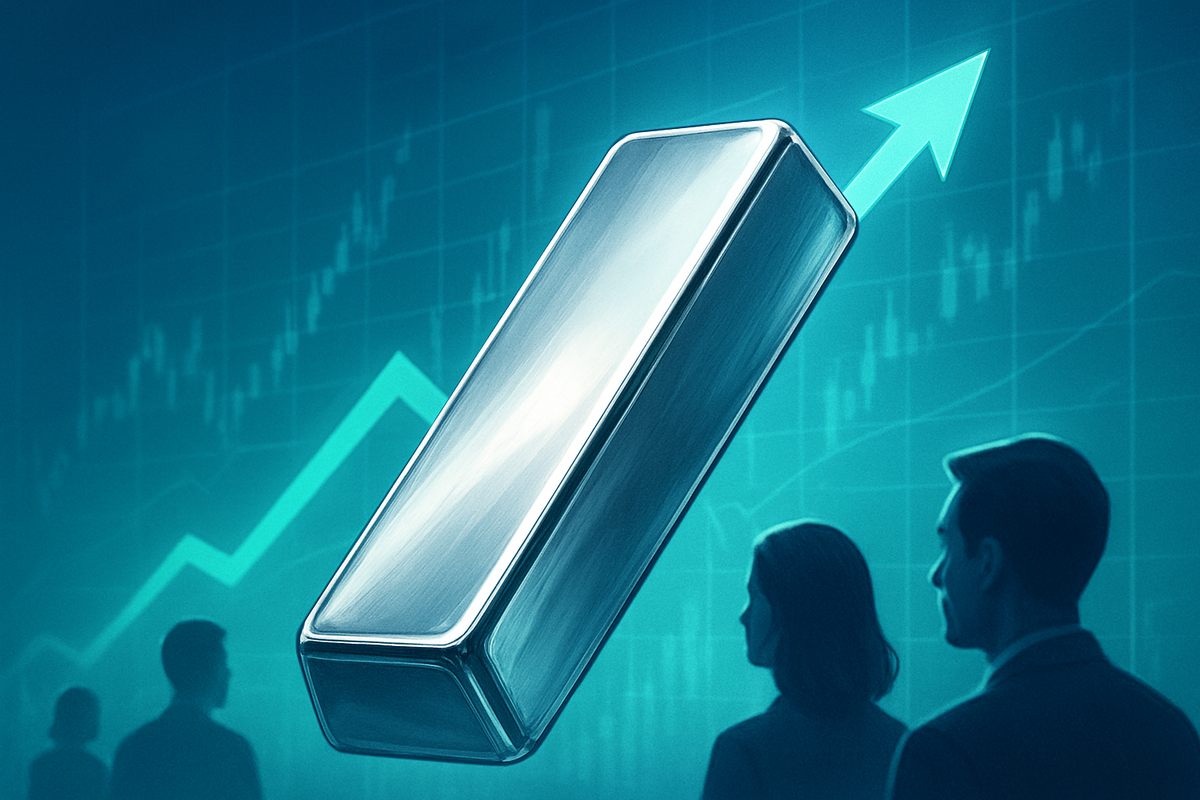
Silver prices are currently experiencing an unprecedented surge, consistently trading at or near all-time nominal record highs as of December 8, 2025. The white metal has become a standout performer in the commodities market, with its value nearly doubling over the past year. This remarkable ascent, which has seen silver outperform even gold, is largely fueled by a powerful combination of robust industrial demand, persistent supply deficits, and an enthusiastic influx of capital from Exchange Traded Fund (ETF) investors. The rally signifies a profound re-evaluation of silver's role, not just as a precious metal, but as a critical industrial commodity in the burgeoning green economy.
The immediate implications of this surge are multifaceted. For investors, silver has delivered exceptional returns, attracting significant attention and capital flows into silver-backed ETFs. For industries reliant on silver, particularly in the rapidly expanding solar and electronics sectors, the record prices present both challenges in managing input costs and opportunities for innovation in material efficiency. The sustained upward trajectory suggests a fundamental shift in market dynamics, potentially signaling a new era for silver valuation.
The White Metal's Unprecedented Ascent: A Detailed Timeline
The current silver rally is the culmination of several years of building momentum, with 2024 and 2025 marking a period of explosive growth. Silver, which traded around $23.13 per ounce in October 2023, began its steady climb in early 2024, breaking above US$25 by March, driven by growing expectations of interest rate cuts.
By mid-2024, the momentum accelerated, with prices decisively breaking the US$30 barrier. May 2024 saw unprecedented physical delivery demands on the COMEX futures exchange, including a historic delivery exceeding 50 million ounces, indicating tightening physical supply. The price continued its upward trajectory, reaching a year-to-date high of US$34.72 by October 22, 2024, its highest level in 12 years, partly due to escalating geopolitical tensions. Silver concluded 2024 at $29.68 per ounce, having gained over 21% for the year and outperforming gold.
The year 2025 has been truly record-breaking. The uptrend dramatically accelerated, with the iShares Silver Trust (NYSE: SLV) recording $644.3 million in inflows in the first half of the year, pushing its holdings to a record 1.13 billion ounces. By July 2025, silver surged to a 13-year high of $38.17 per ounce. October 17, 2025, marked a significant milestone as silver reached $54.46 per ounce in the international market, surpassing its long-standing April 2011 high of $48.70. In the domestic Indian spot market, it hit a new record of ₹1,76,304 per kg on October 14, 2025. By December 3, 2025, silver rocketed to a fresh record high just below $59 per ounce, pushing its year-to-date gain to an astonishing 102%. As of December 5, 2025, silver futures settled at a record $58.422 per ounce.
This sustained rally is underpinned by several key drivers. Firstly, industrial demand has soared, particularly from the renewable energy sector, where silver is critical for solar panels. Demand from photovoltaics alone reached 140 million ounces annually in 2024. The electronics industry, including 5G technology and electric vehicles (EVs), also contributes significantly. Secondly, the market is facing its fifth consecutive year of a supply deficit, estimated at around 149 million ounces this year, systematically draining global above-ground inventories. Thirdly, expectations of US Federal Reserve interest rate cuts this week are making non-yielding precious metals more attractive. Finally, ongoing geopolitical tensions and a historic short squeeze in the London market have also played a role.
Key stakeholders in this market include major mining companies (e.g., Pan American Silver (NASDAQ: PAAS), First Majestic Silver (NYSE: AG), Hecla Mining (NYSE: HL)), industrial consumers (e.g., solar panel manufacturers, electronics giants), investors (both retail and institutional, often through ETFs), bullion banks, and increasingly, central banks and governments who view silver as a strategic asset.
Winners and Losers: Corporate Impact of Soaring Silver
The dramatic rise in silver prices to record highs creates a clear delineation of winners and losers across the corporate landscape, impacting operations, profitability, and stock performance.
The Winners: Miners, Streamers, and Investment Vehicles
Silver mining companies are the most direct beneficiaries. Higher silver prices translate directly into increased revenue and expanded profit margins, assuming production costs remain relatively stable. This can make lower-grade ore bodies economically viable, extend mine life, and incentivize further exploration. Companies like Pan American Silver (NASDAQ: PAAS), one of the world's largest primary silver producers, First Majestic Silver (NYSE: AG), with its significant Mexican operations, and Hecla Mining (NYSE: HL), a long-standing US and Canadian producer, are poised for substantial gains. Other key players include Endeavour Silver (NYSE: EXK), Fortuna Silver Mines (NYSE: FSM), Coeur Mining Inc. (NYSE: CDE), Fresnillo Plc (LSE: FRES), and MAG Silver Corp (NYSE: MAG). Their share prices typically exhibit high beta to silver, often outperforming the metal itself.
Silver streaming and royalty companies also stand to win significantly. These firms, such as Wheaton Precious Metals (NYSE: WPM) and Royal Gold Inc. (NASDAQ: RGLD), provide upfront financing to miners in exchange for the right to purchase future silver production at fixed, low prices. As spot prices climb, their profit margins expand dramatically, offering leveraged exposure to silver without the operational risks of mining.
Investment vehicles, particularly silver-backed ETFs, are also clear winners. Funds like the iShares Silver Trust (NYSE: SLV) and Sprott Physical Silver Trust (NYSE: PSLV) see their Net Asset Value (NAV) directly appreciate with the price of silver. Leveraged ETFs such as ProShares Ultra Silver ETF (NYSE: AGQ) offer amplified returns for bullish investors, while equity-focused ETFs like Global X Silver Miners ETF (NYSE: SIL) benefit from the improved performance of the underlying mining companies.
The Losers: Industrial Consumers and Short Sellers
Conversely, companies heavily reliant on silver as a raw material face significant challenges. Over half of mined silver is consumed by industrial applications, including solar panels, electronics, and electric vehicles. For these manufacturers, soaring silver prices mean higher input costs, which can squeeze profit margins if they cannot pass these costs onto consumers.
Solar panel manufacturers are particularly vulnerable. Silver is a critical component in photovoltaic cells, and its rising cost directly impacts the overall production expense of solar modules. While some manufacturers may try to "thrift" (reduce silver content) or explore alternative materials, significant technological hurdles remain for widespread substitution. Similarly, electronics manufacturers across a broad spectrum of products, from smartphones to 5G infrastructure, will see increased material costs. Electric vehicle (EV) manufacturers also face pressure, as EVs require substantially more silver than traditional vehicles for their complex electrical systems.
Financial institutions or investors holding significant short positions on silver, silver futures, or related equities will incur substantial losses as prices climb. These entities face margin calls and financial setbacks, often being forced to cover their shorts, which can further fuel the upward price momentum.
Wider Significance: A Commodity Market Bellwether
Silver's dramatic ascent to record highs in 2025 is more than just a metal rally; it is a bellwether for broader shifts in the global commodity landscape and economic sentiment. This surge fits into a wider trend of increasing demand for both industrial metals and safe-haven assets, driven by the accelerating green energy transition and persistent global uncertainties.
The green energy transition is a paramount driver. Silver, alongside copper (which has surged 30% in 2025) and platinum (up 90%), is indispensable for renewable energy technologies. The massive build-out of solar farms, electric vehicle infrastructure, and advanced electronics for 5G and AI creates an insatiable, and often price-inelastic, demand for these metals. This distinguishes the current rally from purely speculative bubbles, indicating a fundamental structural demand shift.
The ripple effects are extensive. For other precious metals, silver's outperformance, particularly its narrowing gold-silver ratio (from 105:1 earlier in 2025 to around 70:1 by December), suggests it may still be undervalued relative to gold. This could lead to further "catch-up" gains for silver and potentially draw more capital into the broader precious metals complex. Platinum, with its industrial uses, could also benefit from this spillover demand.
In industrial sectors, the impact is a double-edged sword. While it underscores the vital role of silver, it also imposes significant cost pressures. Solar manufacturers, for instance, face increased production costs, potentially leading to higher product prices or accelerated research into silver-efficient designs. The electronics and automotive industries will also grapple with rising input costs. This could spur innovation in material science but also contribute to inflationary pressures on consumer goods.
From a global economic perspective, the commodity surge contributes to "cost-push" inflation, as manufacturers pass on higher raw material costs. This impacts consumer spending and global trade balances, favoring silver-exporting nations and challenging silver-importing industrial economies. The strong performance of hard assets also signals a shift in investor confidence away from traditional markets and currencies amid economic instability and geopolitical tensions.
Regulatory and policy implications are also emerging. Governments might consider strategic stockpiling of critical minerals like silver, given its role in clean energy and defense. Monetary policymakers, such as the US Federal Reserve, will need to balance interest rate decisions with the inflationary impact of commodity surges. Historically, periods of extreme commodity volatility, like the Hunt brothers' attempt to corner the silver market in the late 1970s, have led to increased market regulation.
This current silver boom echoes historical precedents such as the "Rubber Boom" of 1910, driven by the burgeoning automobile industry, or the commodity surges during inflationary eras like the 1970s. The unique blend of structural industrial demand and safe-haven buying suggests a more sustained upward trend, though commodity markets remain inherently cyclical.
What Comes Next: Navigating the Silver Frontier
The silver market's current trajectory points towards continued dynamism, presenting both opportunities and challenges for the foreseeable future. In the short term (3-12 months), the bullish momentum is expected to persist. Analysts are forecasting silver prices to potentially reach $60-$62 per ounce within this period, with some even anticipating a "silver squeeze" if physical demand overwhelms already tight supplies. Key short-term drivers will be the pace and extent of US Federal Reserve interest rate cuts and evolving global economic data. Lease rate spikes for borrowing physical silver could be an early indicator of an impending squeeze.
Looking at the long term (1-5 years and beyond), the outlook remains overwhelmingly bullish. Forecasts for 2026 often cluster between $50-$65 per ounce, with more aggressive predictions seeing silver potentially hitting $100 before 2028 and even $200 by 2030+. This long-term optimism is rooted in the persistent structural supply deficits, which are difficult to alleviate due to silver being primarily a byproduct of other metal mining. The escalating and largely inelastic industrial demand from the global green energy transition—solar, EVs, energy storage—and advanced electronics (5G, AI, IoT) will continue to be primary drivers. Silver's dual role as an industrial necessity and a monetary safe-haven asset further solidifies its long-term appeal.
Strategic pivots and adaptations will be crucial for market participants. Investors should consider diversified exposure, combining physical silver holdings with silver mining stocks and various ETF vehicles. Active monitoring of central bank policies, geopolitical developments, and silver supply dynamics will be essential for navigating volatility. Risk management, including careful position sizing and clear exit strategies, will be paramount in this high-beta market. For industrial users, strategic stockpiling, accelerated research into silver-efficient designs, and exploration of alternative materials will be necessary to mitigate rising input costs.
New market opportunities are emerging in cutting-edge fields like nanotechnology, AI computing centers, and flexible/wearable electronics, all of which utilize silver. The increasing perception of silver as a "strategic national security resource" by nations like China and Russia could also create new avenues for governmental and institutional investment. However, challenges persist, including the inelasticity of silver supply, potential geopolitical and trade disruptions affecting supply chains, and the possibility of manufacturers "thrifting" silver content in response to high prices. Market volatility, a stronger US dollar, or delays in rate cuts could also trigger corrections.
Potential scenarios for silver prices include an orderly rally (gradual increases allowing market adjustments), a vertical squeeze (rapid, exponential price moves due to acute physical market tightness), or a consolidation/correction scenario (pullbacks or sideways trading after significant rallies). For ETF investors, this could translate into FOMO-driven inflows as prices approach psychological thresholds, momentum investing, or a "reflection effect" where investors are risk-averse when prices rise but risk-seeking during dips. Prudent ETF investors will prioritize diversification, planned exit strategies, and careful position sizing to capitalize on potential moves while managing risk.
Wrap-Up: Silver's Enduring Significance and Future Outlook
The current surge in silver prices to record highs marks a pivotal moment in the commodity markets, underscoring the metal's evolving and increasingly critical role in the global economy. As of December 8, 2025, silver's nearly 95% year-to-date gain is a testament to the powerful confluence of factors driving its value.
Key takeaways from this rally emphasize silver's dual nature: it is both an indispensable industrial metal, particularly for the burgeoning green energy and advanced electronics sectors, and a resilient safe-haven asset amidst global economic and geopolitical uncertainties. The persistent structural supply deficits, coupled with robust and largely inelastic industrial demand, form the bedrock of this upward trajectory. Furthermore, significant inflows into silver-backed ETFs highlight a growing recognition among investors of silver's unique value proposition and its potential for substantial appreciation.
Looking forward, the market's likely trajectory remains overwhelmingly bullish. Forecasts from leading institutions and analysts suggest continued upward momentum, with many predicting prices to reach $60-$65 per ounce in the coming months and potentially much higher in the long term. The anticipated US Federal Reserve interest rate cuts in 2026, a softening US dollar, and sustained demand from the green revolution are expected to provide strong tailwinds. While inherent market volatility and potential for "thrifting" by industrial users exist, the fundamental supply-demand imbalance is likely to keep the physical market tight.
Silver's lasting impact lies in its re-evaluation as a "strategic asset for the 21st century." Its critical role in the irreversible global shift towards renewable energy, electric vehicles, and advanced technology positions it for sustained relevance and demand. This structural change suggests that the era of abundant, low-priced silver may be over, with underlying fundamentals now firmly asserting themselves in price formation.
What investors should watch for in the coming months (early 2026):
- Federal Reserve Monetary Policy: Closely monitor any announcements regarding interest rate cuts, as dovish policy will likely continue to support precious metals.
- Industrial Demand Data: Track manufacturing output, especially in the solar, EV, and electronics sectors, for signs of sustained or accelerating demand.
- Supply Dynamics and Inventory Levels: Keep an eye on global mine production, recycling rates, and inventory levels at major exchanges (COMEX, LBMA, SGE) for indicators of physical market tightness.
- Geopolitical Developments: Ongoing tensions, trade policy changes, and actions by central banks (particularly in BRICS nations) will continue to influence market sentiment and supply chains.
- US Dollar Index (DXY): A weakening dollar generally makes dollar-denominated commodities like silver more attractive to international buyers.
- Gold-Silver Ratio: Continue to observe the gold-silver ratio. A sustained low or falling ratio could indicate continued confidence in silver's growth potential relative to gold.
- Technological Innovations: Monitor for any significant breakthroughs in silver substitutes that could, in the long term, mitigate industrial demand.
This content is intended for informational purposes only and is not financial advice