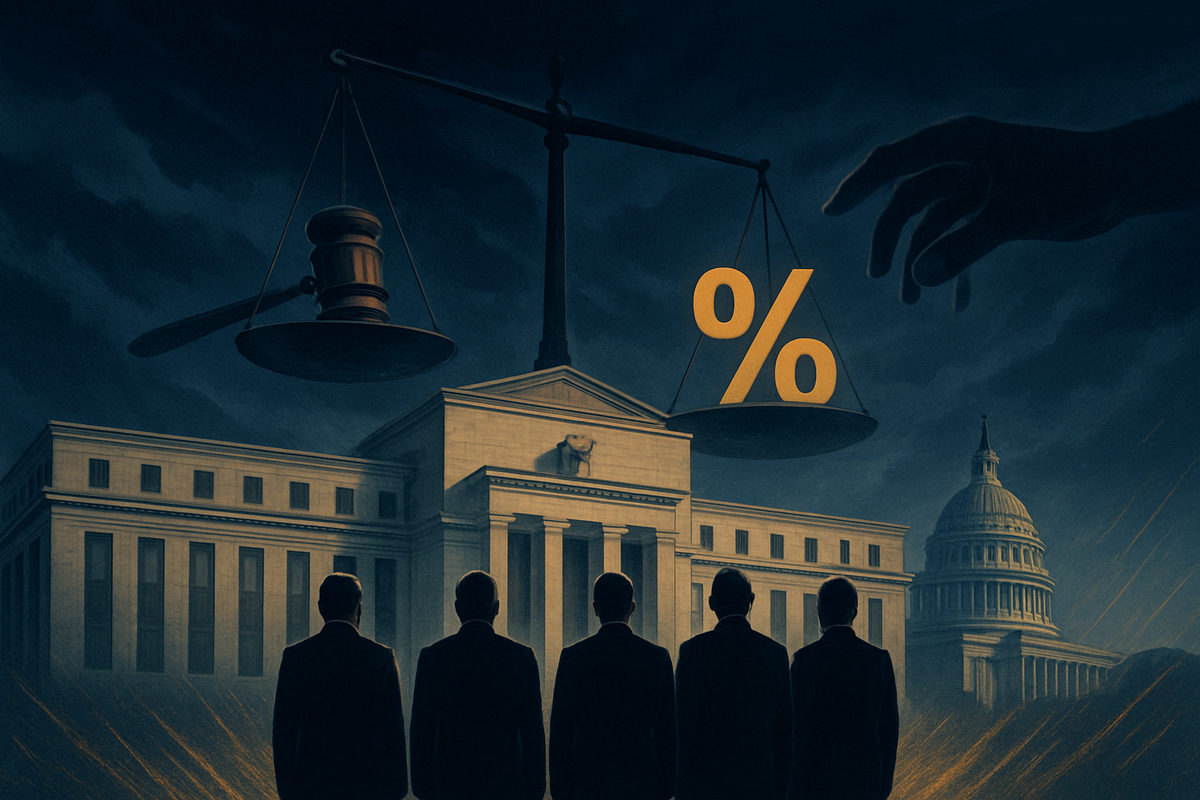
WASHINGTON, D.C. — In a historic display of institutional solidarity, a bipartisan coalition of former Federal Reserve leaders and Treasury officials issued a blistering rebuke today, January 12, 2026, against the Department of Justice’s (DOJ) criminal investigation into sitting Fed Chair Jerome Powell. The joint statement, signed by former chairs Alan Greenspan, Ben Bernanke, and Janet Yellen, warns that the probe represents a "dangerous and unprecedented" assault on the independence of the U.S. central bank, threatening to destabilize global markets and ignite a new era of runaway inflation.
The controversy centers on a DOJ grand jury subpoena served to the Federal Reserve on January 9, 2026, ostensibly focused on whether Powell misled Congress regarding a $2.5 billion renovation of the Fed’s headquarters. However, Powell and his predecessors have characterized the investigation as a "pretextual" attempt by the Trump administration to intimidate the Fed into making aggressive interest rate cuts. As the standoff intensifies, the U.S. dollar has begun to falter against major currencies, while gold prices have surged to record highs, reflecting a growing "regime uncertainty" that has rattled investors worldwide.
The Probe and the Pretext: A Timeline of Escalation
The current crisis is the culmination of a year-long feud between the White House and the Federal Reserve. Throughout 2025, President Trump frequently attacked Powell on social media, labeling him a "numbskull" for refusing to slash rates despite the administration's economic targets. The tension reached a breaking point on January 9, 2026, when U.S. Attorney Jeanine Pirro authorized subpoenas investigating Powell’s June 2025 testimony. The DOJ alleges that Powell misrepresented the costs of the Fed's headquarters renovation, specifically disputing his claims that the project lacked "extravagant" features like rooftop gardens and specialized elevators.
On January 11, Powell broke the Fed’s traditional silence on legal matters, releasing a video statement where he directly linked the criminal probe to political pressure. "This is not about a building; it is about whether the Fed will be able to continue to set interest rates based on evidence and data, or whether monetary policy will be directed by political decree," Powell stated. The following day, January 12, the former chairs issued their joint statement, joined by former Treasury Secretaries Robert E. Rubin and Timothy F. Geithner. They argued that using the threat of prosecution to influence monetary policy is a tactic usually reserved for "emerging markets with weak institutions," and warned that the erosion of the Fed’s autonomy could lead to a catastrophic loss of global confidence in the U.S. financial system.
Market Fallout: Winners and Losers in an Era of Uncertainty
The threat to Fed independence has sent shockwaves through the equity and commodity markets, creating a stark divide between "safe haven" assets and rate-sensitive financial institutions. Gold mining stocks have been the primary beneficiaries as investors flee the dollar. Newmont (NYSE: NEM), Barrick Gold (NYSE: GOLD), and Agnico Eagle Mines (NYSE: AEM) all saw significant gains today as spot gold prices climbed toward $4,640 an ounce. Investors are increasingly viewing precious metals as the only viable hedge against a "politically captured" Fed that might be forced to prioritize short-term growth over long-term price stability.
Conversely, the banking sector has faced a brutal sell-off. Major institutions like JPMorgan Chase (NYSE: JPM), Goldman Sachs (NYSE: GS), and Bank of America (NYSE: BAC) saw their shares slide as analysts warned of a "leadership vacuum" at the heart of the U.S. economy. The uncertainty is compounded by the administration’s concurrent push for a 10% cap on credit card interest rates, which has decimated consumer finance stocks. American Express (NYSE: AXP) and Capital One (NYSE: COF) were among the hardest hit, with Synchrony Financial (NYSE: SYF) plunging over 10% on fears that a weakened Fed would be unable to defend the banking system from populist regulatory overreach.
Historical Echoes and the Threat of the "Great Inflation"
The current conflict is not without historical precedent, though the use of a criminal probe marks a significant escalation. Analysts have drawn parallels to 1965, when President Lyndon B. Johnson reportedly physically intimidated then-Chair William McChesney Martin at his Texas ranch over interest rate hikes. Similarly, the 1972 pressure campaign by Richard Nixon on Arthur Burns is often cited as the catalyst for the "Great Inflation" of the 1970s. In that instance, Burns yielded to Nixon’s demands for low rates ahead of the election, leading to a decade of double-digit inflation and a 44% decline in the Dow Jones.
The wider significance of the DOJ’s probe lies in the potential "inflation premium" now being priced into the bond market. The 10-year Treasury yield has spiked as investors demand higher returns to compensate for the risk that the Fed will no longer act as a bulwark against rising prices. This shift suggests that the market is beginning to doubt the "Fed Put"—the long-held belief that the central bank would remain an independent, stabilizing force regardless of the political climate. If the DOJ's tactics succeed in forcing Powell out before his term expires in May 2026, it could signal a permanent shift toward a "politicized" dollar.
What Comes Next: The Road to May 2026
In the short term, the market will be hyper-focused on the Fed's next policy meeting. If the Fed cuts rates, it may be perceived as a capitulation to the DOJ's pressure; if it holds steady, the administration may escalate its legal attacks. This "no-win" scenario for Powell creates a volatile environment for strategic planning at major corporations. Companies may begin to pivot their balance sheets toward harder assets or international currencies to mitigate the risk of a domestic inflationary spiral.
Long-term, the focus remains on the May 2026 expiration of Powell’s term. The administration has already begun vetting potential successors who are more aligned with its "growth at all costs" philosophy. However, any nominee seen as a political "pawn" will likely face a grueling confirmation process and further market skepticism. The ultimate outcome may depend on whether the unified front of former Fed chiefs can sway public and congressional opinion enough to force the DOJ to back down, or if the "temple" of the Federal Reserve has been permanently breached.
A Precarious Moment for the Global Economy
The rebuke by Greenspan, Bernanke, and Yellen serves as a clarion call for the preservation of institutional norms that have governed the U.S. economy for over a century. The key takeaway for investors is that the "independence" of the Federal Reserve is no longer a settled fact, but a contested political battleground. As long as the DOJ probe continues, the risk of "regime uncertainty" will likely keep volatility high and weigh on the valuations of traditional financial institutions.
Moving forward, the market will be looking for signs of institutional resilience or further erosion. Watch for the Fed's internal response to the subpoenas and any potential legislative efforts in Congress to protect the bank's autonomy. For now, the "Sell America" sentiment reflects a profound fear that the U.S. is trading its long-term economic credibility for short-term political gains. Investors should remain cautious, keeping a close eye on inflation data and the ongoing legal drama in Washington, as the stakes for the global financial order have rarely been higher.
This content is intended for informational purposes only and is not financial advice.