NEW YORK — Financial markets are recalibrating their expectations for the remainder of 2026 following a pivotal inflation report that suggests the Federal Reserve’s long battle against price pressures may finally be entering its final act. Data released by the Bureau of Labor Statistics on February 13, and further analyzed in comprehensive reports through February 16, 2026, shows that January consumer prices cooled significantly more than economists had projected. The headline Consumer Price Index (CPI) rose just 0.2% for the month, dragging the annual rate down to 2.4%—the lowest level in nearly five years.
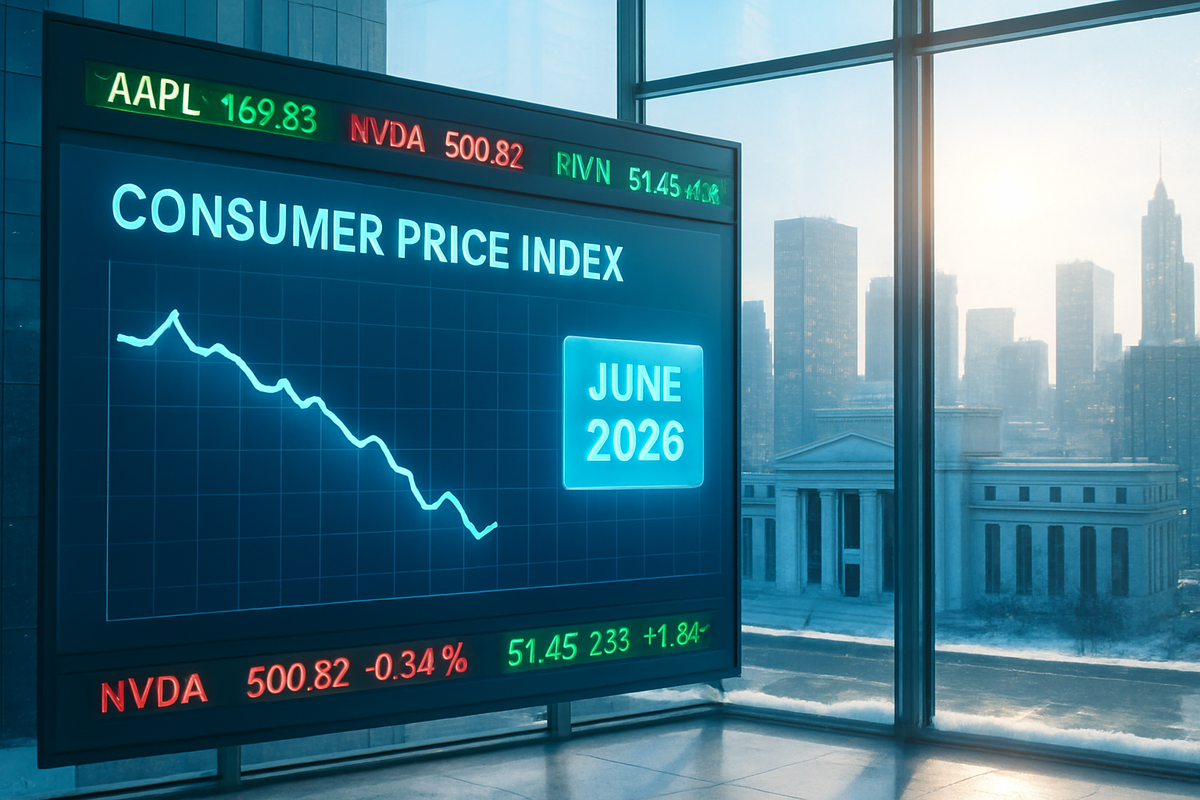
This unexpected disinflationary "win" has fundamentally shifted the narrative for the Federal Open Market Committee (FOMC). While the Fed had previously signaled a "higher-for-longer" stance throughout much of late 2025, the January data has led traders to aggressively price in a June 2026 rate cut. As of February 17, 2026, fed fund futures indicate a nearly 90% probability of a 25-basis-point reduction by mid-year, a sharp reversal from the sub-50% odds seen just weeks ago. However, even as the "soft landing" narrative gains momentum, the market remains on edge, balancing the relief of lower inflation against broader volatility in the technology sector.
Disinflation Takes Hold as Energy and Food Lead the Retreat
The January CPI report was a masterclass in cooling price pressures, driven primarily by a significant retreat in volatile components. Energy prices led the downward charge, falling 1.5% month-over-month, with gasoline prices alone plunging 3.2%. Food prices, which remained stubbornly high for much of the post-pandemic era, also showed a marked slowdown. Core CPI, which strips out these volatile elements, rose 0.3% in January, bringing the year-over-year core rate to 2.5%—the lowest annual reading since March 2021.
Despite the positive headline figures, the data revealed a "sticky" underbelly that continues to worry some analysts. Services inflation remained persistent, particularly in sectors where labor costs are a primary driver. Airline fares spiked 6.5% during the month, while personal care services, including salons and health clubs, rose 5.4% on an annual basis. Furthermore, while housing and shelter costs moderated to a 0.2% monthly increase, they remain the single largest contributor to the remaining inflationary pressure. Reports from February 16 also noted that a "tariff pass-through" effect is beginning to emerge in durable goods like computers and video equipment, as supply chains adjust to the ongoing "America First" trade policies.
Market Winners and Losers in the Wake of the Print
The equity market reaction to the cooling inflation print has been complex, characterized by a "relief bounce" in some sectors and a continued sell-off in others. Among the primary beneficiaries of the lower-than-expected inflation and falling yields was the electric vehicle sector. Rivian Automotive Inc. (NASDAQ: RIVN) saw its shares surge over 26% following the report, aided by a timely analyst upgrade and the prospect of lower borrowing costs. Similarly, semiconductor equipment giant Applied Materials Inc. (NASDAQ: AMAT) jumped 10% after reporting strong earnings that bucked the general trend of semiconductor weakness, signaling that domestic manufacturing remains a bright spot.
Conversely, the "SaaSpocalypse"—a term coined by traders to describe the massive sell-off in Software-as-a-Service (SaaS) stocks—cast a shadow over the Nasdaq. Despite the lower yields, megacap tech giants like Nvidia Corp. (NASDAQ: NVDA) felt the pressure, falling approximately 2% as investors questioned the sustainability of massive AI-related capital expenditures. Apple Inc. (NASDAQ: AAPL) managed a modest relief rally after a brutal week of losses fueled by concerns over its AI strategy, yet it remains under intense scrutiny. In the financial sector, JPMorgan Chase & Co. (NYSE: JPM) saw a mixed reaction; while the bank is expected to benefit from a stabilizing economy, the sharp drop in the 2-year Treasury yield to 3.41%—its lowest since 2022—raises concerns about narrowing net interest margins.
A Policy Pivot Amid Leadership Transition
The January inflation data is not occurring in a vacuum; it arrives during a period of significant transition at the Federal Reserve. Markets are closely watching the looming leadership change, with speculation intensifying that Jerome Powell’s expected successor, Kevin Warsh, may use the June 2026 meeting as a stage for a more aggressive policy pivot. The narrative of a "soft landing" is now the consensus view, yet the path forward is complicated by the intersection of monetary policy and fiscal trade agendas.
Historically, this period draws comparisons to the mid-1990s, where the Fed successfully orchestrated a soft landing by preemptively cutting rates as inflation moderated. However, the current environment is unique due to the structural shifts in the labor market and the lingering effects of global trade tensions. The "America First" trade policies and associated tariffs are creating a divergent inflationary environment: while services and energy are cooling, the cost of imported goods is starting to creep up. This "dual-track" inflation could make the Fed’s final push to the 2% target more volatile than past cycles.
Looking Ahead: The Road to June
As we move through the first quarter of 2026, the market’s focus will shift from the CPI to the Personal Consumption Expenditures (PCE) price index—the Fed’s preferred inflation gauge—set to be released later this month. If the PCE data confirms the disinflationary trend seen in the CPI, the calls for a June rate cut will become a roar. Strategic pivots are already underway among institutional investors, who are rotating out of high-multiple tech and into rate-sensitive sectors like real estate and small-caps, which have been battered by high borrowing costs for years.
However, the path to June is not without hurdles. The Fed will likely remain "data-dependent" through its March and May meetings, seeking confirmation that the January dip wasn't a seasonal fluke. Potential shocks to the energy market or a sudden re-acceleration in wage growth could still derail the pivot. For the moment, the market is basking in the "January Thaw," but the underlying tech volatility and the potential for tariff-driven price hikes suggest that the road to a 2% inflation target remains a narrow and winding one.
Summary and Investor Outlook
The cooling of inflation in January 2026 marks a critical milestone for the U.S. economy, providing the clearest signal yet that the Federal Reserve may finally have the "green light" to ease its restrictive monetary policy. The drop in headline CPI to 2.4% has effectively moved the timeline for the first rate cut forward to June, sparking a rally in bonds and sending Treasury yields to multi-year lows. While the stock market remains bifurcated—with tech struggling under the weight of AI valuation concerns while other sectors like EVs and domestic manufacturing thrive—the broader sentiment is one of cautious optimism.
Investors should watch for the upcoming PCE data and Fed commentary for any pushback against the June cut narrative. While the "soft landing" appears to be within reach, the "sticky" services sector and the emerging impact of trade tariffs remain the primary risks to this outlook. In the coming months, the ability of the Fed to navigate its leadership transition while keeping inflation in check will be the ultimate test for the markets.
This content is intended for informational purposes only and is not financial advice.