NEW YORK — In a historic reversal of market dynamics, the utility sector, long the stolid and predictable "bond proxy" of Wall Street, has emerged in early 2026 as one of the most aggressive growth engines in the equity market. Driven by the voracious electricity demands of artificial intelligence (AI) data centers, traditional power providers are seeing a fundamental re-rating. As of February 17, 2026, the sector is no longer viewed merely as a defensive hedge against volatility, but as the indispensable physical foundation of the digital revolution.
This shift reached a fever pitch following key strategist insights released on February 11, 2026, which underscored a "Great Defensive Pivot." Analysts now argue that the "AI-Energy Nexus" has entered a new phase: moving from the speculative "hype" of software and chips to the tangible reality of the electrical grid. With the Utilities Select Sector SPDR Fund (XLU) jumping 6.9% in the first two weeks of February alone, the market is signaling that electrons are now as valuable as the bits they power.
The Infrastructure Phase: From Value to Growth
The transition of utilities from value stocks to growth-style performers has been brewing since late 2024, but the week of February 11, 2026, served as a definitive turning point for institutional sentiment. Corinne Maillet de Boursetty, Senior Equity Strategist at Lombard Odier, noted in a seminal report that while technology remains a primary earnings driver, market performance is "broadening" significantly into the power sector. She emphasized that electrification and the massive scaling of data center campuses are now the core contributors to secular earnings growth, a phenomenon she termed an "interesting reversal" of the sector's historical role.
This transformation is rooted in a startling reversal of a 20-year trend. For two decades, U.S. electricity demand remained largely flat; however, by February 2026, projections now show demand growing by 1% to 2% annually through 2030. Evercore ISI analysts have labeled this the "Race to Power," noting that if 2025 was the year of "price discovery" for electricity, 2026 is the year of "price certainty." Tech "hyperscalers" like Microsoft, Meta (Nasdaq: META), and Alphabet Inc. (Nasdaq: GOOGL) are no longer just browsing for power; they are locking in multi-decade purchase agreements to ensure their AI models don't go dark.
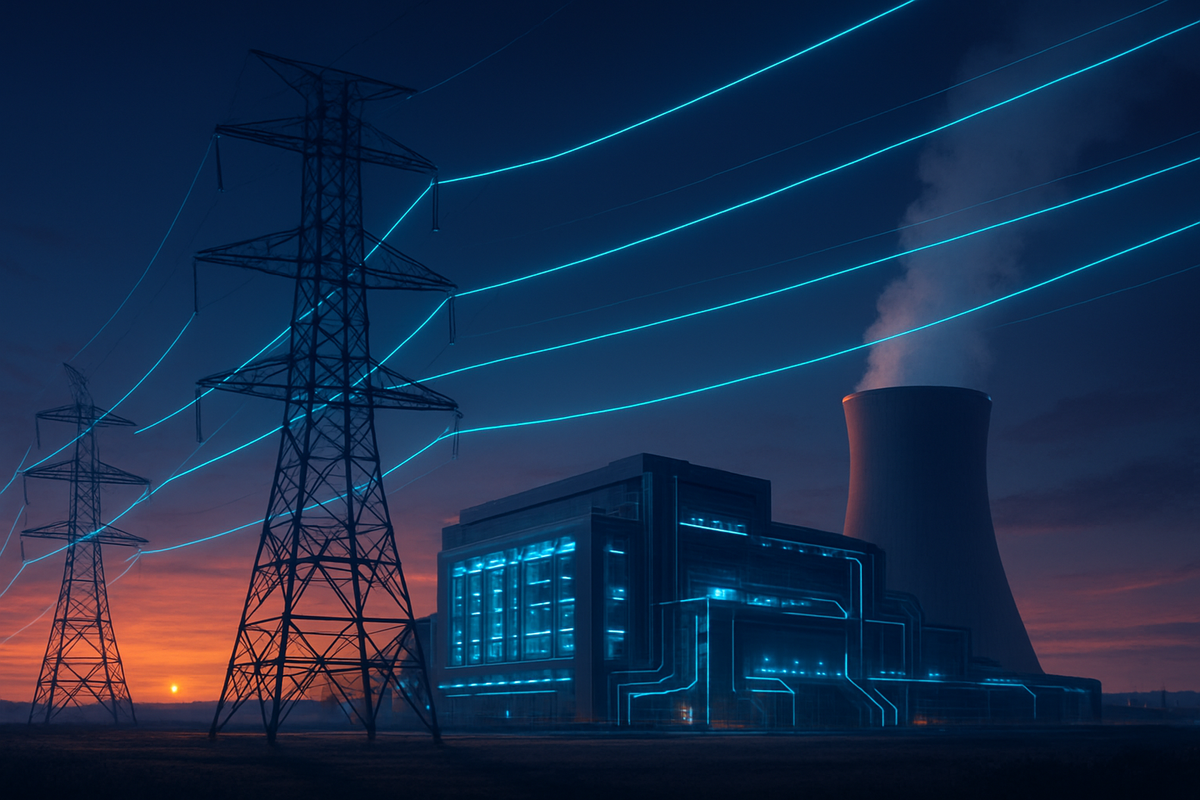
The timeline leading to this moment was accelerated by the realization that the grid itself is the ultimate bottleneck. By mid-February 2026, the average wait time for a new grid connection in primary data center markets has exceeded four years. This scarcity has forced a shift in strategy, where data centers are being built "behind-the-meter," directly adjacent to existing power plants, fundamentally changing how utility companies value their legacy assets.
The Winners of the Electron Gold Rush
Several key players have emerged as the primary beneficiaries of this structural shift, seeing their valuations decouple from traditional interest-rate sensitivity and align more closely with high-growth tech multiples.
- NextEra Energy (NYSE: NEE): Already a leader in renewables, NextEra has solidified its position through a massive partnership with Google Cloud to develop gigawatt-scale data center campuses. By February 2026, the company is projecting an 8% annual EPS growth rate through 2029, a figure more typical of a mid-cap tech firm than a regulated utility.
- Constellation Energy (Nasdaq: CEG) and Vistra Corp (NYSE: VST): These firms are the primary beneficiaries of the "Nuclear Renaissance." Because AI data centers require "firm," 24/7 carbon-free power, Constellation’s massive nuclear fleet has been re-rated as premium growth infrastructure. Vistra has similarly seen its shares surge after securing major power purchase agreements with Meta, highlighting the value of its "dispatchable" carbon-neutral assets.
- Dominion Energy (NYSE: D): Located at the heart of "Data Center Alley" in Northern Virginia, Dominion disclosed in February 2026 that its "large-load" queue has reached a staggering 70 gigawatts—nearly triple its system's all-time peak load. Despite regulatory hurdles, its $50 billion five-year capital plan is one of the most ambitious in the industry.
- Southern Company (NYSE: SO) and Duke Energy (NYSE: DUK): Both are managing record-breaking interconnection requests in the high-growth Southeast. Southern Company’s completion of the Plant Vogtle nuclear units has positioned it as a leader in carbon-free baseload energy, while Duke is navigating a surge in demand in the Carolinas that has pushed its projected earnings growth into the 7% to 9% range.
Analyzing the Significance: A New Regulatory Frontier
The wider significance of this trend lies in the "physicality" of the AI boom. Unlike previous tech cycles that were largely virtual, the AI era requires a massive build-out of physical infrastructure. This has sparked a capital expenditure super-cycle, with U.S. utilities planning over $1 trillion in grid upgrades through 2029. This level of investment is reminiscent of the mid-20th-century expansion of the American electrical system, yet it is happening at a much faster pace.
However, this growth comes with significant regulatory and policy friction. On February 13, 2026, Bank of America analysts pointed out that "affordability pressure" is becoming the primary risk to the sector. As utilities spend billions to accommodate data centers, residential consumer bills are rising. In Virginia, Senate Bill 253 is currently being debated, which seeks to shift the cost of grid upgrades directly onto data center operators rather than residential ratepayers. This "fair share" debate is likely to become a central political issue ahead of the 2026 mid-term elections.
Furthermore, the "Nuclear Renaissance" represents a major policy shift. In February 2026, the Nuclear Regulatory Commission (NRC) began streamlining risk-informed operations for existing plants, acknowledging that meeting AI-driven climate goals is impossible without a robust nuclear backbone. This parallels the historical shift toward coal in the early 20th century, but with a modern emphasis on carbon neutrality.
What Lies Ahead: Challenges and Strategic Pivots
Looking forward, the utility sector faces a dual reality: unprecedented opportunity and operational strain. In the short term, the market will likely see more "behind-the-meter" deals where tech giants co-locate data centers with power plants to bypass the grid bottleneck. We may also see utilities transition into "energy-as-a-service" providers, offering specialized microgrids for high-priority AI clusters.
The long-term challenge will be maintaining reliability. As demand surges, some utilities, like Southern Company, have had to delay the retirement of older fossil fuel plants to ensure the lights stay on while new renewable and nuclear assets ramp up. This "reliability bridge" will be a critical area for investors to watch throughout the remainder of 2026 and into 2027.
Potential strategic pivots may include utilities moving into the data center business themselves. By owning both the power source and the facility, they could capture more of the value chain. Conversely, tech companies may continue to move backward into power generation, potentially becoming competitors to the very utilities they currently rely on.
Summary and Investor Outlook
The utility sector’s transformation into a growth engine is one of the most significant market evolutions of the mid-2020s. The "Great Defensive Pivot" of February 2026 has shown that the energy needs of AI are not just a temporary surge but a secular shift in how the global economy consumes power. Investors are now treating "electrons" with the same growth fervor they once reserved for "bits."
Moving forward, the market will be characterized by increased volatility as utilities navigate the transition from income-stable entities to high-growth, high-CapEx machines. Investors should closely monitor Q4 2025 earnings reports from Southern Company and Dominion Energy, scheduled for late February 2026, for updated guidance on data center load queues and capital deployment plans.
The lasting impact of this event is a redefined utility sector: one that is more volatile and capital-intensive but offers significantly higher capital appreciation potential than any period in the last 50 years. For the first time in decades, the sector that keeps the lights on is also the one leading the charge in the stock market.
This content is intended for informational purposes only and is not financial advice.