As the sun sets on February 18, 2026, the global retail landscape is bracing for what could be a defining moment in the "membership wars." Tomorrow morning, Walmart (NYSE: WMT) is scheduled to release its fourth-quarter fiscal year 2026 earnings report, and the stakes have never been higher. Having recently crossed the historic $1 trillion market capitalization threshold, the Bentonville-based giant is no longer just the world’s largest discount grocer; it has transformed into a high-margin, tech-driven ecosystem that is increasingly the first choice for America’s wealthiest households.
The immediate implications of tomorrow’s report extend far beyond simple revenue and profit figures. Investors are looking for confirmation that Walmart’s pivot toward high-income consumers—those earning over $100,000 annually—and its aggressive expansion into high-margin digital services like advertising and its Walmart+ membership program are fundamentally shifting the company’s profit profile. If the anticipated "beat and raise" scenario unfolds, it could cement Walmart's status as the apex predator of the omnichannel era, leaving rivals to scramble for the remaining market share in an increasingly bifurcated economy.
The Transformation of the "Store of the Future"
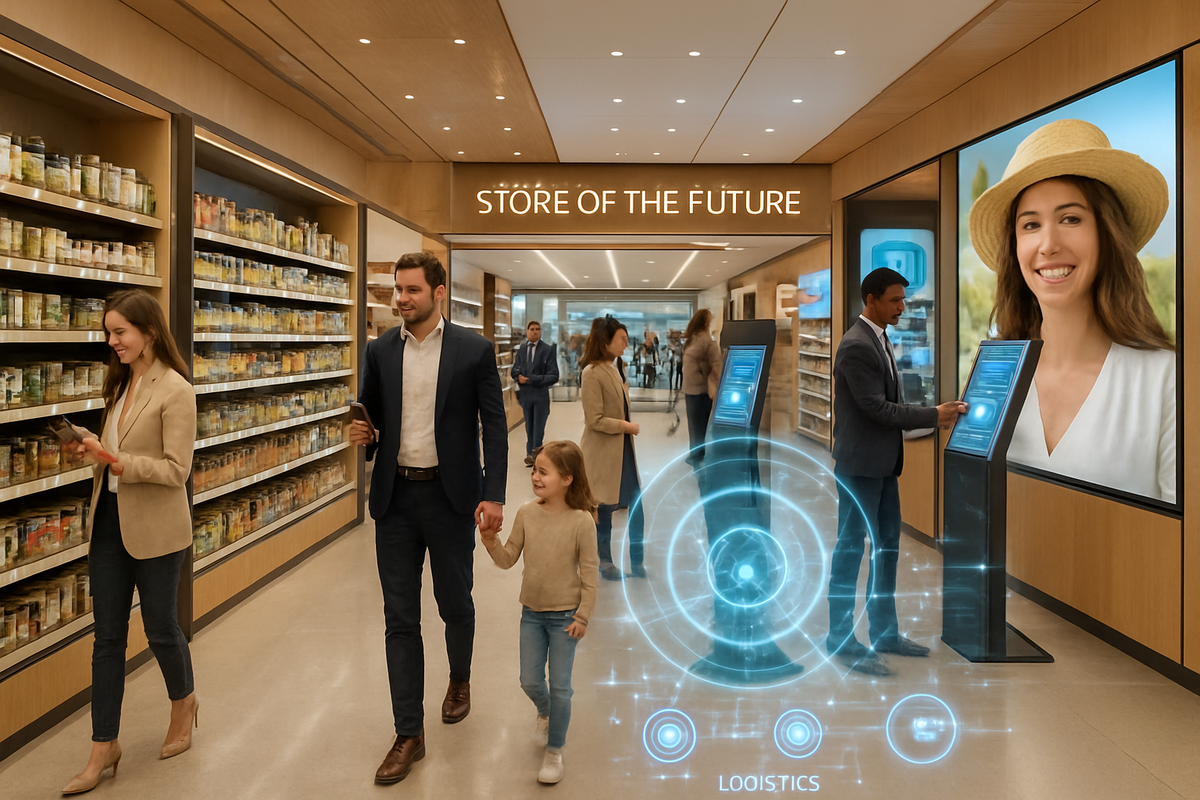
Walmart’s journey to this moment has been a multi-year masterclass in strategic reinvention. Leading into the Q4 2026 report, the company has successfully shed its "no-frills" image, completing over 650 "Store of the Future" remodels. These locations, featuring improved lighting, boutique-style displays, and digital shelf labels, were specifically designed to attract the "time-poor, cash-rich" demographic that previously favored specialty grocers or high-end department stores. This physical transformation was anchored by the 2024 launch of "Bettergoods," a premium private label that has become a magnet for affluent shoppers. Data suggests that high-income households are now 20% more likely to purchase these curated, organic items than traditional discount brands, a trend that has fueled a staggering 75% of Walmart’s recent market share gains.
The timeline leading up to tomorrow's report shows a consistent acceleration of this strategy. Throughout 2025, CEO Doug McMillon and CFO John David Rainey emphasized a "flywheel" effect where low-margin retail sales drive high-margin services. The acquisition of VIZIO for $2.3 billion was a pivotal moment in this timeline, allowing Walmart to integrate the SmartCast operating system into its "Onn" private-label TVs. This move effectively turned every television sold at Walmart into a data-gathering and advertising hub, providing the backbone for Walmart Connect. By early 2026, the company’s advertising arm was growing at six times the rate of its retail sales, bolstered by the ability to offer household-level Connected TV (CTV) targeting based on real-world shopping data.
Winners and Losers in the New Retail Order
In the current environment, Walmart (NYSE: WMT) stands out as the clear winner, leveraging its massive physical footprint as a "hub-and-spoke" fulfillment network. By using its 4,700+ stores to fulfill nearly 50% of online orders, the company has achieved what was once thought impossible: e-commerce profitability on a massive scale. The growth of Walmart+, which reached a record 28.4 million members by January 2026, has created a recurring revenue stream that mirrors the loyalty once reserved exclusively for Amazon (NASDAQ: AMZN).
Conversely, Target (NYSE: TGT) has emerged as a significant loser in this shifting landscape. Once the undisputed king of "cheap chic," Target has struggled to maintain its edge as Walmart encroached on its territory with premium apparel and home goods. While the Target Circle 360 loyalty program has seen growth among younger shoppers, the company’s stock has languished, losing nearly a third of its value over the past 18 months due to inconsistent execution in fresh grocery. Meanwhile, Amazon (NASDAQ: AMZN) has been forced into a "Great Grocery Reset," announcing the closure of dozens of Amazon Fresh and Amazon Go stores to consolidate under the Whole Foods banner. While Amazon remains a digital titan, its retreat from physical "everyday" grocery stores highlights the immense competitive pressure Walmart has applied to the $100k+ income demographic.
The Margin Revolution and Industry Ripple Effects
The significance of Walmart’s Q4 2026 report lies in the fundamental "Amazon-ification" of its margins. Historically, Walmart operated on razor-thin retail margins, but the explosion of Walmart Connect and membership income has provided a high-margin cushion that allows the company to invest even more aggressively in automation and price leadership. By 2026, Walmart expects 65% of its stores to be serviced by automated fulfillment systems, reducing unit handling costs by approximately 20%. This technological lead is creating a massive barrier to entry for smaller regional grocers and specialized retailers who cannot afford the multi-billion dollar R&D required to compete.
Broadly, this event signals a shift in the advertising industry. Walmart Connect is no longer a "niche" retail media network; with the VIZIO integration, it has become a legitimate competitor to Google (NASDAQ: GOOGL) and Meta (NASDAQ: META) for "top-of-funnel" brand awareness spending. As Walmart proves it can link a TV ad directly to a grocery purchase within hours, the entire digital advertising landscape is being forced to adapt to a world where "closed-loop" measurement is the minimum requirement. Furthermore, this move upmarket by the world’s largest retailer may attract regulatory scrutiny, as lawmakers watch the consolidation of data and retail power within a single trillion-dollar entity.
What Lies Ahead: The Automated Frontier
Looking past tomorrow’s report, the short-term focus will remain on FY2027 guidance. Analysts are expecting Walmart to project operating income growth of around 11%, a significant step up from its historical 4-8% range. If the company hits these targets, it will likely be due to the continued scaling of its automated fulfillment centers (MFCs). These mini-warehouses, attached to existing stores, represent the next phase of the strategy: a world where "Express" delivery (under 3 hours) becomes the default for the majority of the U.S. population.
In the long term, the strategic pivot may move toward financial services or healthcare. With a massive, loyal base of high-income Walmart+ members and a sophisticated data engine, the company is perfectly positioned to offer more integrated fintech products or primary care services via its "Walmart Health" clinics. The challenge will be maintaining the delicate balance between its "Everyday Low Price" heritage and its new, upscale identity. Any sign that the core, lower-income shopper is being alienated in favor of the affluent $100k+ demographic could create a vulnerability that a resurgent discount competitor might exploit.
Summary and Investor Watchlist
Tomorrow’s Q4 2026 earnings report is expected to be a milestone in Walmart’s evolution. Investors should keep a close eye on three key metrics: the growth of Walmart Connect revenue, the expansion of Walmart+ membership, and—most importantly—the contribution of high-income shoppers to overall comparable store sales. If Walmart can prove that its gain in the $100k+ demographic is permanent rather than a temporary "trade-down," it will have successfully rewritten the rules of American retail.
As the market moves forward, the "flywheel" of high-margin services subsidizing lower-price retail is the most important trend to watch. For years, the market treated Walmart as a slow-moving giant; in 2026, it is clear that the giant has learned to run at the speed of a tech company. The era of the "General Store" is over; the era of the "Data-Driven Lifestyle Ecosystem" has begun, and Walmart is currently sitting at the head of the table.
This content is intended for informational purposes only and is not financial advice.