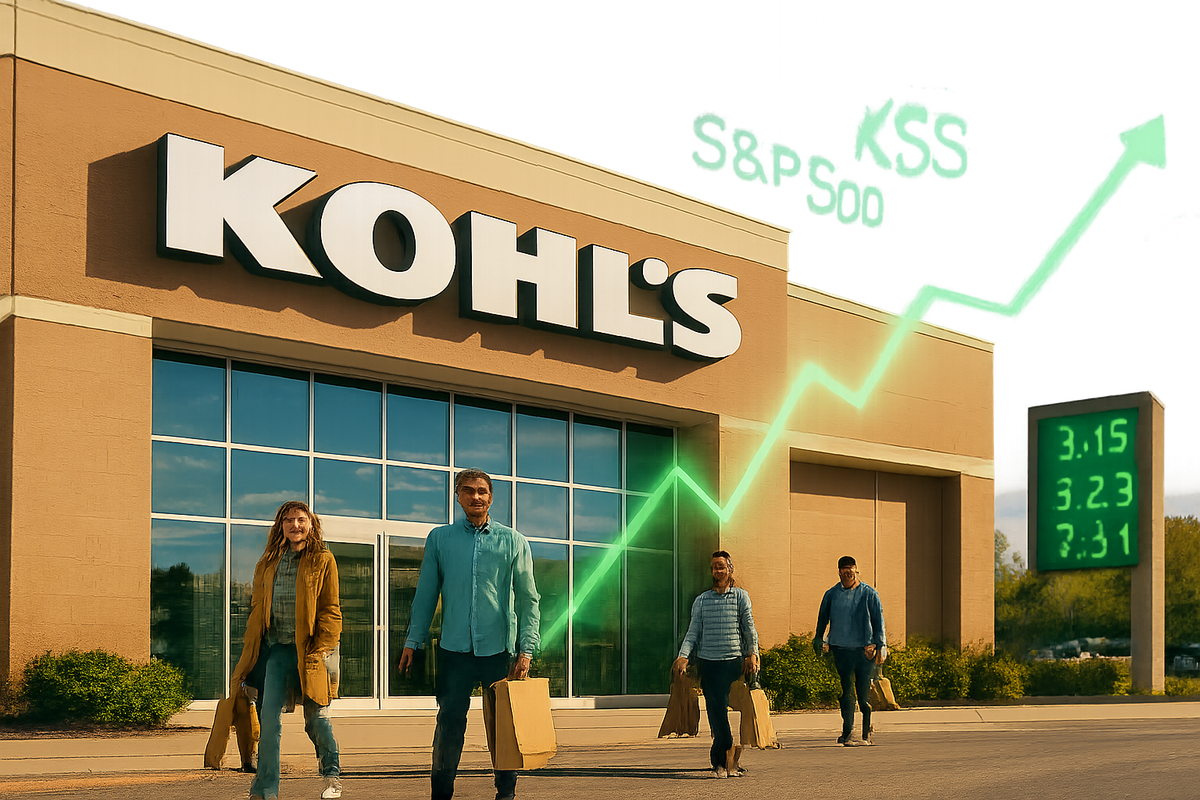
In a dramatic Tuesday trading session on March 10, 2026, Kohl’s Corp (NYSE: KSS) emerged as a standout performer in the S&P 500, with shares jumping more than 7.3% to lead the index’s gains. The surge was fueled by a potent combination of a significant fourth-quarter earnings beat and a broader "relief rally" across the retail sector. This market-wide optimism followed comments from President Donald Trump suggesting a swift de-escalation of the conflict with Iran, which sent global oil prices into a tailspin and provided much-needed clarity for the consumer discretionary outlook.
The rally marks a pivotal shift for Kohl’s, which has navigated a volatile retail environment characterized by fluctuating input costs and fragile consumer sentiment. As the broader market digested the cooling of geopolitical tensions, investors pivoted toward value-oriented retailers, betting that lower energy prices would translate directly into increased disposable income for middle-market households. The move not only lifted Kohl’s but also revitalized a retail sector that had been weighed down by the "stagflation" fears prevalent in early 2026.
A "Double Catalyst" Day: Earnings and Geopolitics
The catalyst for Kohl’s outperformance began early Tuesday morning when the company reported its fourth-quarter 2025 financial results. Despite a slight dip in net sales to $5.0 billion, the retailer delivered a robust adjusted profit of $1.07 per share, comfortably surpassing the analyst consensus of $0.85. Management attributed the "profit beat" to disciplined inventory management and higher-margin beauty sales through its continued partnership with Sephora. However, the stock's initial pre-market reaction was muted due to cautious sales guidance for the remainder of 2026.
The narrative shifted abruptly following a televised interview with President Trump on CBS News late Monday, which reverberated through the Tuesday session. Trump characterized the ongoing tensions and military "excursion" involving Iran as "very complete, pretty much," signaling a faster-than-expected resolution. By Tuesday morning, Brent crude oil—which had peaked near $120 per barrel just 24 hours earlier—plummeted over 10% to approximately $87. This "normalization" of energy prices acted as a massive psychological weight being lifted from the retail sector, turning Kohl's earnings-driven gains into a full-scale breakout.
Market participants reacted to the news with a "risk-on" appetite, viewing the drop in oil as a de facto tax cut for the American consumer. The Strait of Hormuz, a critical energy artery that had been under threat of closure, saw stabilized trade prospects as the administration signaled "naval escorts for tankers" and a potential waiving of certain oil-related sanctions to ensure supply. This shift allowed Kohl's and its peers to capitalize on a macro-economic backdrop that suddenly looked far less predatory to discretionary spending than it did a week prior.
Market Winners and Losers: Retail vs. Energy
The ripple effect of the oil price collapse created a clear divide between "winning" consumer-facing stocks and "losing" energy giants. Retailers like Walmart Inc (NYSE: WMT) and Target Corp (NYSE: TGT) saw gains of 0.8% and 1.8%, respectively, as investors anticipated a reduction in logistics and freight costs. For Kohl’s, the impact was even more pronounced due to its sensitivity to the "gasoline dividend"—the surplus cash consumers have when fuel prices drop.
The transportation sector also experienced a significant lift. Airlines, which have struggled with a "war premium" on jet fuel, staged a massive recovery. Delta Air Lines (NYSE: DAL) and United Airlines (NASDAQ: UAL) were among the day's top gainers, rebounding from their worst performance in months as the prospect of sustained $150 oil evaporated. The sector-wide sentiment shifted from defensive posturing to growth-oriented speculation as the immediate threat of an energy-led recession receded.
Conversely, the energy sector was the day's primary laggard. Companies that had thrived on the geopolitical risk premium saw their valuations "tempered" as traders rotated capital back into value and growth stocks. ExxonMobil (NYSE: XOM) and Chevron Corp (NYSE: CVX) both faced downward pressure, with Chevron falling approximately 1.1% in midday trading. The reversal underscored the market's belief that the "peak oil panic" of early 2026 has transitioned into a period of price correction and stabilization.
Analyzing the Significance: A "Volatility Circuit Breaker"
The significance of the March 10 rally extends beyond a single day’s gains; it serves as a "volatility circuit breaker" for an industry that has been besieged by early-2026 tariff concerns and inflationary pressures. Financial analysts are drawing parallels to the early-2020 de-escalations, where a similar "flash" conflict between the U.S. and Iran led to a sharp but brief oil spike followed by a massive relief rally. Like the 2020 "Phase 1" trade deal, the current geopolitical shift provides retailers with a window of "pain relief," allowing them to move away from defensive pricing and focus on volume growth.
This event also highlights the fragility of the current "K-shaped" consumer recovery. While high-income households have remained resilient, the middle-to-lower-income demographic served by Kohl’s is highly sensitive to the University of Michigan consumer sentiment index, which has stagnated in the mid-50s. The normalization of oil toward the $80-$90 range is seen as a prerequisite for a sustainable rebound in sentiment. Without the relief at the pump, retailers would have faced a "Golden Quarter" (Q4) characterized by severe "trading down" to private-label and discount brands.
Furthermore, the rally validates a broader shift in corporate strategy for 2026: the integration of "Agentic AI" in supply chain management. Companies that successfully navigated the early-year supply shocks are now using the breathing room provided by the rally to accelerate AI investments. These tools are being used to rebalance inventories and mitigate the "bullwhip effect" that often follows geopolitical crises, making the retail sector more resilient to the "shock-and-recovery" cycles that have defined the mid-2020s.
What Comes Next: The Road to Late 2026
Looking ahead to the second half of 2026, the retail sector faces a "K-shaped normalization." While the immediate energy crisis has cooled, the structural impact of 2025 and 2026 tariffs remains a significant hurdle for durable goods. Investors should watch for a potential "reversal of the flight to value." If energy prices continue to moderate through Q3, we may see a resurgence in mid-tier discretionary categories like home furnishings and apparel, which have been underrepresented in recent consumer baskets.
The short-term focus for Kohl’s will be maintaining the momentum of its Q4 earnings beat while navigating a "cautiously optimistic" retail environment. Strategic pivots toward "experience-focused" retail and the continued expansion of high-growth partnerships (like Sephora) will be critical as the company attempts to outpace its own cautious guidance. The possibility of "retroactive stimulus" via tax relief on tips and overtime—a policy frequently discussed by the administration—could provide an additional tailwind for consumer spending heading into the 2026 holiday season.
Market Wrap-Up and Final Thoughts
The March 10 trading session will be remembered as the moment the market "priced out" a worst-case regional war scenario. Kohl’s 7% jump is a testament to the power of a combined fundamental earnings beat and a favorable macro-economic pivot. For investors, the key takeaway is that while the "war premium" has been removed from the energy markets, the underlying resilience of the American consumer remains the true engine of the S&P 500.
Moving forward, the market remains reactive and sentiment-driven. While today's relief rally offers a glimpse of a stabilized 2026, the floor for oil prices and the trajectory of the consumer sentiment index are the critical metrics to watch. The retail sector has shown it can survive a "pincer movement" of high costs and geopolitical tension, but its long-term health will depend on the permanence of the current de-escalation and the ability of companies like Kohl’s to convert temporary relief into lasting operational efficiency.
This content is intended for informational purposes only and is not financial advice.