Today’s Date: December 23, 2025
Introduction
As 2025 draws to a close, few stories in the American equity markets have been as compelling as the transformation of Vistra Corp. (NYSE: VST). Once perceived as a legacy "boring" utility—a relic of a massive Texas-based bankruptcy—Vistra has successfully rebranded itself as a high-growth infrastructure play at the intersection of decarbonization and the Artificial Intelligence (AI) revolution.
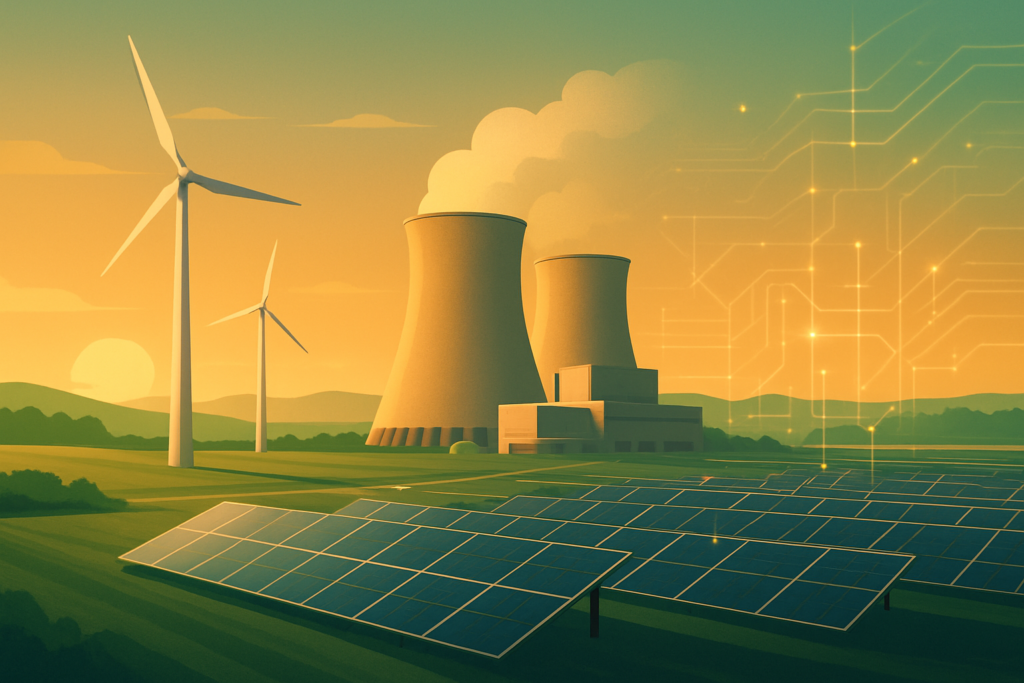
In a year where the energy sector faced fluctuating commodity prices, Vistra outperformed nearly all its peers, riding a wave of unprecedented demand for "firm," carbon-free electricity. This surge is largely driven by hyperscalers like Amazon, Microsoft, and Google, who require immense, 24/7 power supplies for their AI data centers. With its massive nuclear fleet, strategic retail presence, and disciplined capital allocation, Vistra has emerged as a titan of the modern grid.
Historical Background
The Vistra narrative is one of the most remarkable corporate resurrections in U.S. history. The company’s roots lie in the ashes of Energy Future Holdings (EFH), which filed for a $42 billion bankruptcy in 2014—the largest non-financial Chapter 11 in American history. EFH was the result of a 2007 leveraged buyout of TXU Corp, which famously bet on high natural gas prices only to be decimated by the shale revolution.
Vistra emerged as a standalone entity in late 2016 with a clean balance sheet and a focus on operational efficiency. Under the early leadership of Curt Morgan and currently Jim Burke, the company executed a series of transformative moves. The 2018 acquisition of Dynegy expanded Vistra’s reach beyond Texas into the PJM and ISO-NE markets. However, the most pivotal moment came in March 2024 with the completion of the Energy Harbor acquisition, which added three nuclear plants to its portfolio and solidified its position as a clean-energy leader.
Business Model
Vistra operates an integrated model that pairs massive power generation with a robust retail consumer business. This "integrated" approach acts as a natural hedge: when wholesale power prices are low, the retail arm (which buys power to serve customers) thrives; when prices are high, the generation arm reaps significant profits.
The company is organized into two primary strategic buckets:
- Vistra Vision: This is the growth engine, housing the company’s zero-carbon assets, including the nuclear fleet (Comanche Peak and Energy Harbor assets) and its "Vistra Zero" renewables and battery storage projects.
- Vistra Tradition: This segment manages the legacy natural gas and coal-fired plants. While these are often seen as "transition" assets, their ability to provide "dispatchable" power during peak demand has made them more valuable than ever in a volatile grid environment.
- Retail Operations: Serving nearly 5 million residential, commercial, and industrial customers primarily through TXU Energy, this segment provides stable, recurring cash flows that fund the company’s aggressive dividend and buyback programs.
Stock Performance Overview
Vistra’s stock performance over the last 24 months has been nothing short of extraordinary. After a breakout year in 2024, where the stock surged over 260% to become the top performer in the S&P 500, the momentum has continued into 2025.
As of late December 2025, VST shares are trading near all-time highs, frequently touching the $180–$200 range. Over a five-year horizon, the stock has provided a total return exceeding 800%, vastly outperforming the Utilities Select Sector SPDR Fund (XLU). This performance shift reflects the market’s realization that Vistra is no longer just a utility but a critical infrastructure provider for the digital age.
Financial Performance
Vistra’s financial health in 2025 reflects its high-margin nuclear operations and favorable capacity prices.
- EBITDA Guidance: For the full year 2025, the company guided toward Adjusted EBITDA of $5.5 billion to $6.1 billion, with long-term targets for 2026 exceeding $6.8 billion.
- Cash Flow: Vistra is a free-cash-flow machine, projecting $3.0 billion to $3.6 billion in Adjusted Free Cash Flow before growth (AFCFbG) for the year.
- Capital Allocation: The "Vistra Way" is defined by shareholder returns. The company has reduced its outstanding share count by roughly 30% since 2021 and continues to execute at least $1 billion in annual share buybacks.
- Valuation: While its P/E multiple has expanded from the single digits in 2023 to the mid-20s in late 2025, it still trades at a slight discount to its closest peer, Constellation Energy (NASDAQ: CEG), despite similar growth profiles.
Leadership and Management
Jim Burke, who took the helm as CEO in 2022, is widely credited with the "disciplined execution" that has defined Vistra’s recent success. Burke has maintained a laser focus on two priorities: optimizing the nuclear fleet and returning capital to shareholders.
Under Burke’s leadership, the management team has navigated complex regulatory waters with agility. The integration of Energy Harbor was completed ahead of schedule, and the company’s 2025 acquisition of Lotus Infrastructure Partners' gas assets for $1.9 billion demonstrated a savvy ability to pick up "firming" assets that support a renewable-heavy grid.
Products, Services, and Innovations
Beyond simple power generation, Vistra is at the forefront of energy technology:
- Nuclear Baseload: The Comanche Peak (Texas) and Energy Harbor (Ohio/PA) nuclear plants are Vistra's "crown jewels," providing carbon-free power that data centers value at a premium.
- Energy Storage: Vistra operates the Moss Landing Power Plant in California, which houses the world's largest lithium-ion battery storage system. This allows the company to store excess renewable energy and discharge it when prices are highest.
- Nuclear Uprates: In late 2025, Vistra announced plans for significant "uprates" (technical upgrades to increase output) at its nuclear facilities to meet the escalating demand from AI hyperscalers.
Competitive Landscape
Vistra operates in a highly competitive deregulated market. Its primary rivals include:
- Constellation Energy (CEG): The largest nuclear operator in the U.S. Vistra and Constellation are often viewed as a "duopoly" in the premium nuclear-for-AI trade.
- NRG Energy (NYSE: NRG): A major competitor in the Texas retail market. NRG is more consumer-focused, whereas Vistra has a more balanced generation-to-retail ratio.
- Talen Energy (NASDAQ: TLN): A smaller peer that pioneered the "nuclear co-location" model with Amazon at its Susquehanna plant.
Vistra’s competitive edge lies in its ERCOT dominance (Texas), where it controls a massive chunk of the market in a state with the fastest-growing power demand in the country.
Industry and Market Trends
The "AI Power Crunch" is the dominant trend of 2025. Data centers are projected to consume nearly 10% of total U.S. electricity by 2030, up from roughly 4% in 2023. This has led to a paradigm shift:
- Scarcity Pricing: Wholesale power prices in the PJM market (covering the mid-Atlantic) hit record levels in the 2025 capacity auctions, clearing at $333 per MW-day.
- Electrification: The broader push toward electric vehicles (EVs) and heat pumps is adding baseline load to the grid that hasn't been seen in decades.
- Grid Reliability: As older coal plants retire, the "firm" power provided by Vistra’s nuclear and gas plants has become essential for grid stability.
Risks and Challenges
Despite the bullish narrative, Vistra faces significant hurdles:
- Regulatory Volatility: The "behind-the-meter" deals (connecting data centers directly to power plants) have faced scrutiny from regulators concerned about grid stability and costs for everyday consumers.
- Commodity Exposure: While heavily hedged through 2026, Vistra remains sensitive to long-term swings in natural gas and electricity prices.
- Operational Risk: Managing a massive nuclear fleet requires perfect safety records. Any incident at a Vistra or peer plant could trigger a regulatory crackdown on the entire industry.
- Project Delays: Supply chain issues for transformers and high-voltage equipment continue to delay the build-out of new solar and battery projects.
Opportunities and Catalysts
- The FERC Breakthrough: Just days ago, on December 18, 2025, FERC issued a landmark order that cleared the path for data center co-location in the PJM market. This is a massive near-term catalyst for Vistra’s Energy Harbor assets.
- SMR Potential: While still in the early stages, Vistra is exploring the deployment of Small Modular Reactors (SMRs) at its existing plant sites, which could offer a new generation of carbon-free growth.
- Texas Energy Fund: Vistra is leveraging low-interest loans from the Texas Energy Fund to build new, high-efficiency gas "peaker" plants to support the ERCOT grid.
Investor Sentiment and Analyst Coverage
Wall Street remains overwhelmingly bullish on Vistra. As of December 2025, major firms including JP Morgan, BMO Capital, and Wells Fargo maintain "Outperform" or "Overweight" ratings.
- Consensus Price Target: The average price target stands at approximately $233, suggesting significant upside even after the massive run-up.
- Institutional Backing: Institutional ownership is exceptionally high at over 90%, with giants like Vanguard, BlackRock, and Norges Bank holding core positions. The stock has become a favorite for "quality" and "growth" style managers alike.
Regulatory, Policy, and Geopolitical Factors
The regulatory environment has shifted from a headwind to a tailwind. The Inflation Reduction Act (IRA) provides a nuclear production tax credit (PTC) that effectively puts a "floor" under Vistra’s nuclear revenues.
Geopolitically, the focus on "energy sovereignty" and the domestic manufacturing of chips (via the CHIPS Act) has made reliable domestic power a matter of national security. Vistra’s role as a provider of that power grants it a level of political insulation that few other industries enjoy.
Conclusion
Vistra Corp. has transitioned from a restructuring story to the leading light of the American utility sector. By successfully integrating its nuclear assets and positioning itself as the "fuel" for the AI era, it has captured the imagination of investors and the contracts of the world’s largest tech companies.
For investors, Vistra represents a unique "barbell" play: it offers the safety and cash flow of a regulated-style utility with the explosive growth potential of a technology infrastructure provider. While valuation risks and regulatory debates over co-location persist, the fundamental reality of 2025 is clear—the world needs more power, and Vistra is one of the few companies capable of delivering it at scale, carbon-free, and on demand.
This content is intended for informational purposes only and is not financial advice.