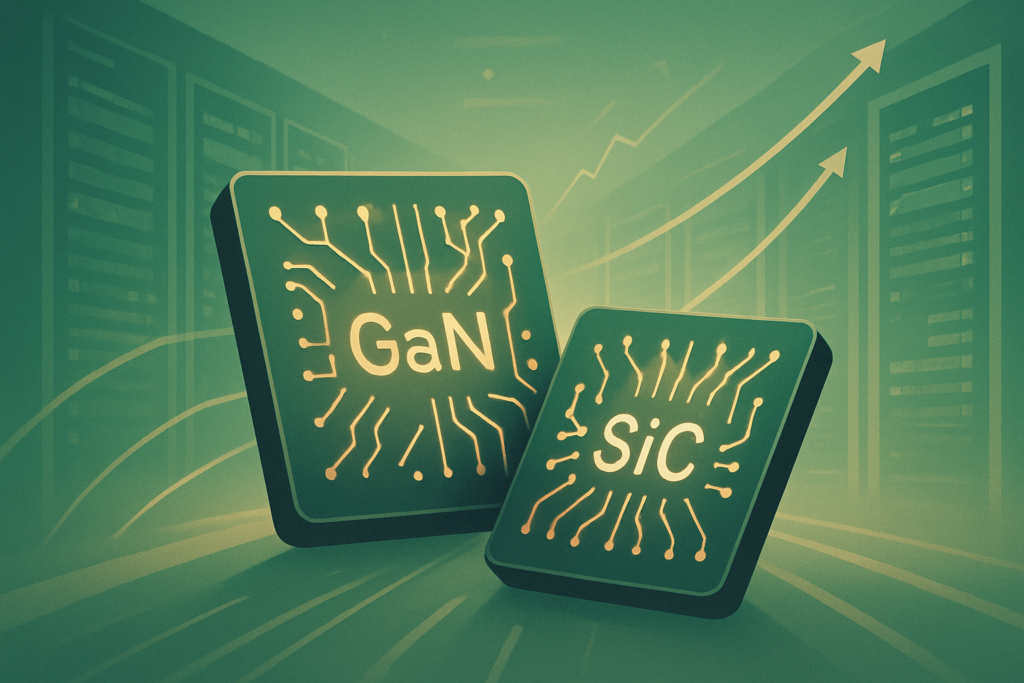
In the rapidly evolving landscape of high-performance computing, the "bottleneck" has shifted from the speed of the processor to the efficiency of the power delivery. Navitas Semiconductor (NASDAQ: NVTS) has found itself at the center of this paradigm shift. Following the recent launch of its 5th-generation GeneSiC chips specifically engineered for AI data centers, the company’s stock has surged 25%, signaling a potential "inflection point" for a firm that spent much of 2025 restructuring its core business. As AI infrastructure matures, Navitas is positioning itself as the critical link between the high-voltage grid and the power-hungry silicon of the future.
Historical Background
Founded in 2014 by industry veterans Gene Sheridan and Dan Kinzer, Navitas was built on a singular vision: "Electrify Our World." The company initially gained prominence as the pioneer of Gallium Nitride (GaN) power integrated circuits (ICs), which revolutionized the mobile fast-charging market by making chargers smaller, lighter, and more efficient.
A transformative milestone occurred in 2022 when Navitas acquired GeneSiC Semiconductor, a move that added Silicon Carbide (SiC) technology to its portfolio. This acquisition transitioned Navitas from a niche consumer electronics supplier to a comprehensive power semiconductor house. However, 2025 proved to be a year of painful transformation, as the company intentionally exited the low-margin Chinese mobile market to focus on high-power industrial and AI applications—a strategic pivot now referred to in analyst circles as "Navitas 2.0."
Business Model
Navitas operates as a "fabless" semiconductor company, focusing its resources on design, R&D, and intellectual property while outsourcing the capital-intensive manufacturing process to leading foundries. This model allows for high agility and lower capital expenditure.
The company's revenue streams are currently undergoing a massive shift. While once dominated by mobile chargers, the revenue mix is now tilting toward:
- Data Centers: Powering the massive AI "factories" that require 800V architectures.
- Electric Vehicles (EVs): On-board chargers and traction inverters.
- Renewable Energy: Solar inverters and energy storage systems.
- Industrial Electrification: High-efficiency motor drives and automation.
By targeting these high-margin segments, Navitas aims to trade high-volume, low-profit consumer sales for high-value industrial contracts with longer design cycles and stickier customer relationships.
Stock Performance Overview
The performance of NVTS has been a rollercoaster for long-term investors. Over the 5-year horizon, the stock has faced volatility typical of the "SPAC-era" semiconductor entrants, largely tracking the highs of the 2021 tech boom and the lows of the 2023 interest rate hikes.
However, the 1-year performance tells a story of recovery. After hitting a multi-year low in mid-2025 during its strategic restructuring, the stock has rebounded sharply. The recent 25% jump is attributed directly to the market’s realization that Navitas has secured a role in the NVIDIA (NASDAQ: NVDA) 800V AI ecosystem. Investors who weathered the 2025 "revenue bottom" are now seeing the fruits of the company’s pivot toward high-performance power silicon.
Financial Performance
Navitas enters 2026 with a strengthening balance sheet but lingering questions about its path to GAAP profitability.
- Revenue Growth: After a planned revenue contraction in 2025 (down to ~$46M as they exited mobile markets), 2026 projections suggest a rebound to the $65M – $90M range.
- Margins: Gross margins, which dipped to the mid-30s during the transition, are targeting a return to 40-45% as the 5th-gen GeneSiC products ramp up.
- Cash Position: Following a successful funding round in late 2025, the company maintains a cash cushion of approximately $237M, providing a comfortable runway to reach its target of EBITDA positivity by mid-2026.
Leadership and Management
A major leadership transition in late 2025 saw Chris Allexandre take the helm as CEO. A veteran of Renesas and Texas Instruments, Allexandre’s appointment was a clear signal to the market that Navitas was moving away from its "startup" phase and into a disciplined industrial growth phase.
Complementing Allexandre is the newly appointed CFO Tonya Stevens, whose focus has been on tightening operational expenses and improving the conversion of design wins into recognized revenue. Co-founder Dan Kinzer continues to lead the technological roadmap as CTO, ensuring that the company’s R&D edge remains sharp.
Products, Services, and Innovations
The crown jewel of the current portfolio is the 5th-Generation GeneSiC Trench-Assisted Planar (TAP) MOSFET. Launched in early 2026, these chips are designed for 1200V applications.
- The Innovation: The TAP architecture offers a 35% improvement in efficiency over previous generations, significantly reducing heat dissipation—a critical factor for AI server racks.
- GaNFast ICs: Navitas remains a leader in GaN technology, integrating power, drive, and protection into a single chip. These are now being deployed in "800V AI Factories" to switch power from high-voltage DC down to the levels required by GPUs with 98.5% efficiency.
Competitive Landscape
Navitas competes in a "Goliath" market against some of the world’s largest semiconductor firms:
- Infineon (OTC: IFNNY) & STMicroelectronics (NYSE: STM): These giants possess massive manufacturing scale and dominant automotive relationships.
- Wolfspeed (NYSE: WOLF): Once the primary rival in SiC, Wolfspeed’s 2025 Chapter 11 bankruptcy and subsequent restructuring left a vacuum in the market that Navitas has aggressively filled.
- Innoscience: A major Chinese competitor in the GaN space, though geopolitical tensions and IP litigation have limited its expansion into the U.S. and European industrial markets.
Navitas’ advantage lies in its "pure-play" focus on next-gen materials (GaN/SiC) without the "legacy silicon baggage" that slows down larger competitors.
Industry and Market Trends
We are currently in the midst of an AI-led "Giga Cycle." Global semiconductor sales are projected to approach $1 trillion by 2028, driven by the massive power requirements of generative AI. Traditional silicon chips are hitting physical limits in terms of heat and efficiency; wide-bandgap materials like GaN and SiC are no longer "optional" luxuries but essential components for the green transition and the AI boom. Furthermore, the shift from 400V to 800V architectures in both data centers and EVs is a massive tailwind for Navitas’ 1200V-rated chips.
Risks and Challenges
Despite the recent optimism, Navitas faces several head-winds:
- Execution Risk: The pivot from consumer to industrial markets requires a different sales force and longer support cycles. Any delay in the ramp-up of the AI data center contracts could lead to a revenue miss.
- Concentration Risk: A significant portion of the 2026 growth narrative relies on the success of a few major AI infrastructure partnerships.
- Cyclicality: While AI is currently "recession-resistant," the broader semiconductor industry remains sensitive to global macro conditions and interest rate environments.
Opportunities and Catalysts
- NVIDIA Partnership: Continued integration into the NVIDIA 800V reference designs is the primary catalyst for 2026.
- Positive EBITDA: Reaching the break-even point in mid-2026 would likely trigger a re-rating of the stock from a "growth speculative" to a "growth fundamental" asset.
- M&A Potential: As a pure-play leader with high-end IP, Navitas remains a prime acquisition target for larger semiconductor firms looking to leapfrog their GaN/SiC capabilities.
Investor Sentiment and Analyst Coverage
Wall Street sentiment has shifted from "Skeptical" to "Cautiously Optimistic." Following the 25% surge, several analysts have upgraded NVTS to a "Buy," with price targets ranging from $12 to $15. Institutional ownership has stabilized, with hedge funds increasingly viewing NVTS as a high-beta play on the "AI Power" theme. Retail sentiment remains high, often fueled by the company’s direct association with the AI hardware cycle.
Regulatory, Policy, and Geopolitical Factors
Navitas benefits from the U.S. CHIPS Act, which incentivizes domestic semiconductor innovation and supply chain security. However, the company must navigate complex trade restrictions regarding the export of high-performance power electronics to China. As a U.S.-headquartered company with a global supply chain, Navitas is well-positioned to benefit from "friend-shoring" initiatives as Western companies look to de-risk their power electronics supply chains from Chinese providers.
Conclusion
Navitas Semiconductor represents a high-conviction bet on the "efficiency layer" of the AI revolution. After a grueling 2025 focused on restructuring and strategic narrowing, the company’s 5th-gen GeneSiC launch has provided the technical and financial validation the market was seeking. While execution risks remain—particularly regarding the timing of industrial ramps—the alignment of Navitas’ technology with the 800V AI data center mandate makes it a compelling name to watch. For investors, the key metric for the remainder of 2026 will be the speed at which "design wins" translate into "shipped revenue."
This content is intended for informational purposes only and is not financial advice.