As the curtain closes on 2025, Apple Inc. (NASDAQ: AAPL) finds itself at a historic crossroads. The year just ending saw the tech giant successfully navigate the rollout of "Apple Intelligence" and the launch of the iPhone 17, which included the experimental, ultra-thin "iPhone Air." However, as of December 25, 2025, the investor community is already looking past the holiday sales figures toward a 2026 that promises to be the most transformative year for the company’s hardware lineup since the debut of the original iPhone.
The immediate implications of Apple’s current trajectory are clear: the company is no longer just selling hardware; it is selling an AI-integrated ecosystem where the silicon, the software, and the form factor are evolving in lockstep. With the successful stabilization of Siri 2.0 and the introduction of a premium AI subscription tier, Apple has effectively turned its massive install base into a recurring revenue engine, setting the stage for a massive valuation re-rating in the coming year.
The 2025 Foundation: From "Intelligence" to "Agency"
The journey to 2026 began with the pivotal release of the iPhone 17 series in September 2025. This cycle was defined by two major shifts: the democratization of "Pro" features—like the 120Hz ProMotion display—across the entire lineup, and the introduction of the "iPhone Air." While the Air model faced early criticism regarding its thermal management and battery life, its radical 5.6mm design became a viral sensation, particularly in the Chinese market, helping Apple reclaim lost ground against local competitors.
Simultaneously, Apple Intelligence evolved from a collection of beta tools into a fully "agentic" AI system. By late 2025, Siri 2.0 achieved full on-screen awareness, allowing users to execute complex, multi-app commands such as "Take the itinerary from my email and book an Uber for the arrival time." This leap in utility has driven a faster-than-expected upgrade cycle, as older devices struggled to keep up with the local processing requirements of the new AI agents.
The market reaction has been overwhelmingly positive. Throughout 2025, Apple’s stock showed remarkable resilience, buoyed by the realization that AI was not just a gimmick but a fundamental driver of hardware sales. Analysts note that the "wait-and-see" attitude of 2024 has been replaced by a "must-upgrade" sentiment as the gap between AI-capable and non-AI devices becomes a chasm.
The Supply Chain Shuffle: Winners and Losers of the 2nm Shift
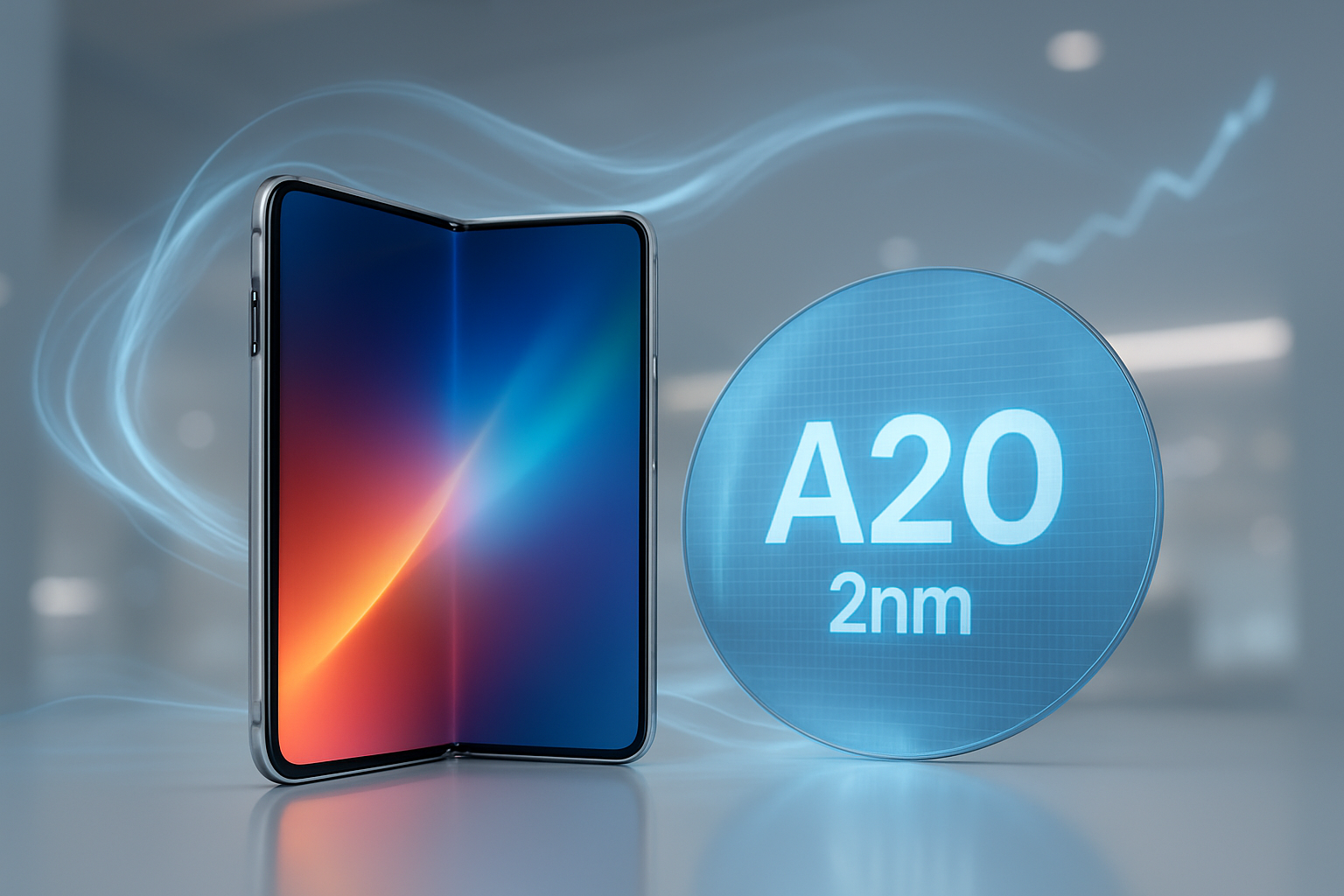
As Apple prepares for 2026, the primary beneficiary of its technological ambition is Taiwan Semiconductor Manufacturing Co. (NYSE: TSM). Apple has reportedly secured over 50% of TSMC’s initial 2-nanometer (2nm) capacity for the upcoming A20 and M6 chips. This "silicon blockade" effectively starves rivals like Qualcomm (NASDAQ: QCOM) and MediaTek of the most advanced nodes, potentially giving the iPhone 18 Pro a two-generation lead in power efficiency and AI processing speed.
Samsung Display, a subsidiary of Samsung Electronics (KRX: 005930), and LG Display (NYSE: LPL) also emerge as major winners. The 2026 roadmap includes a total transition of the MacBook Pro and iPad lines to "Tandem OLED" technology. Samsung Display, in particular, is expected to be the exclusive supplier for the first-ever "iPhone Fold," a book-style foldable device rumored for a late 2026 release.
Conversely, the losers in this transition are the legacy display manufacturers. Companies specializing in Mini-LED and traditional LCD technology, such as Ennostar, are seeing their orders evaporate as Apple moves its entire premium portfolio toward OLED. Furthermore, the high cost of 2nm wafers and the rising price of high-performance DRAM (required for on-device AI) are expected to put pressure on Apple's hardware margins, a factor that some bearish analysts at Loop Capital warn could temper the stock's upside.
A Wider Significance: The Legitimization of the Foldable Era
Apple’s expected entry into the foldable market in 2026 represents more than just a new product; it is the industry’s "validation moment." For years, Samsung has dominated the foldable space with the Galaxy Z Fold and Z Flip series, but the category has remained a niche for enthusiasts. Apple’s rumored 7.6-inch "iPhone Fold" is expected to use a specialized version of iPadOS, focusing on "agentic" multitasking that could redefine mobile productivity.
This shift fits into a broader industry trend where hardware is becoming a vessel for personalized AI. By 2026, the smartphone will no longer be a tool we use, but an agent that acts on our behalf. Apple’s 2nm silicon is the engine for this change, providing the thermal headroom and compute power to run massive language models locally, ensuring the privacy that has become Apple’s core brand promise.
Historically, Apple’s entry into a mature category—be it MP3 players, smartphones, or smartwatches—tends to expand the total addressable market (TAM) rather than just stealing share. Competitors like Alphabet Inc. (NASDAQ: GOOGL) are already pivoting; Google is reportedly accelerating its Pixel Fold iterations to match the wider aspect ratio of Apple’s rumored design, signaling that the "tall and narrow" foldable era may be coming to an end.
The 2026 Horizon: A Roadmap of Firsts
The coming year will be defined by a "split launch" strategy. Rumors suggest that in September 2026, Apple will unveil the iPhone 18 Pro alongside the iPhone Fold, while the standard iPhone 18 models may be pushed to a secondary spring window. This strategy aims to maximize the "halo effect" of the 2nm A20 chip and the foldable form factor, catering to the highest-spending segment of the market first.
Beyond the iPhone, 2026 is expected to see the release of the "Vision Air," a more affordable version of the Vision Pro headset priced around $2,000. This device is seen as critical for bringing spatial computing to the mainstream. Additionally, a new "HomePad" smart display is expected to anchor Apple’s revamped smart home strategy, integrating deeply with the new Siri to manage Matter-enabled devices through voice and gesture.
The long-term challenge for Apple will be managing the transition from a hardware-first company to a services-and-AI powerhouse. The launch of "Apple Intelligence+"—a rumored $10-to-$20 monthly subscription for advanced AI features—will be the first true test of whether consumers are willing to pay for software enhancements on a device they already own.
The Investor’s Verdict: A Super-Cycle in the Making?
As we look toward 2026, the consensus among Wall Street analysts is overwhelmingly bullish. With a median price target of $300.00, firms like Wedbush view the combination of 2nm silicon, the iPhone Fold, and AI monetization as the "perfect storm" for a valuation surge. The key takeaway for investors is that Apple is successfully navigating the transition from the "smartphone era" to the "AI agent era."
However, the market will be watching closely for any signs of supply chain bottlenecks, particularly in the yield of 2nm chips and the durability of the new foldable hinges. The next few months will be critical as Apple begins trial production for its 2026 lineup. For now, the "Apple Super-Cycle" narrative appears to be firmly intact, driven by a product roadmap that is as ambitious as it is expensive.
Investors should keep a sharp eye on the WWDC 2026 announcements in June, which will likely reveal the full scope of Apple’s AI subscription plans and the software foundation for the foldable future. If Apple can successfully marry its world-class hardware with a truly indispensable AI agent, 2026 may indeed be the year it cements its dominance for the next decade.
This content is intended for informational purposes only and is not financial advice.