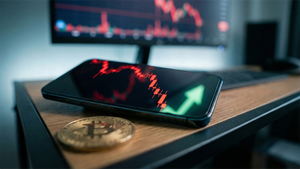
As the opening bells of 2026 ring across Wall Street, investors find themselves standing on a precipice of high growth expectations and thinning margins for error. According to David Sekera, Chief U.S. Market Strategist for Morningstar, the market has entered a "higher stakes" era where the aggressive fair value increases of late 2025 have left little room for disappointment. While the broader market technically trades at a slight discount to its fair value, the concentration of value in high-growth sectors has created a "hair-trigger" environment for volatility.
The immediate implication for the 2026 investment landscape is a shift from the broad-based "everything rally" to a more surgical, active management approach. Sekera warns that while the AI narrative remains the dominant force driving market sentiment, the required growth rates to sustain current valuations for mega-cap tech stocks have reached unprecedented levels. This dynamic suggests that 2026 will be defined by sharp bouts of turbulence as the market reacts to every macro-economic data point and corporate earnings release with heightened sensitivity.
Navigating the "Higher Stakes" Narrative
David Sekera’s "2026 US Stock Market Outlook," released in early January, paints a picture of a market that is fundamentally sound but structurally fragile. The "higher stakes" cited in his report refer to the extreme growth expectations baked into the current prices of technology and communication stocks. Following a series of fair value estimate hikes by Morningstar analysts in the fourth quarter of 2025, many stocks are now priced for perfection. Any deviation from the projected AI monetization path could result in swift and severe price corrections.
The timeline leading to this precarious moment began in late 2024 and accelerated through 2025, as the build-out of artificial intelligence infrastructure exceeded even the most optimistic forecasts. However, as we enter January 2026, the market is no longer satisfied with the "build-out" phase; it is now demanding tangible evidence of productivity gains and bottom-line impact. This transition has coincided with several looming macro-economic "event risks" that Sekera believes will test investor resolve throughout the year.
Key stakeholders, including institutional fund managers and retail investors, are closely watching a transition at the Federal Reserve. With a new Fed Chair expected to take office in May 2026, the era of predictable monetary policy may be coming to an end. This leadership change, combined with the upcoming 2026 U.S. midterm elections and renewed trade tensions with global partners, creates a cocktail of uncertainty. Initial reactions to Sekera’s outlook have been cautious, with defensive sectors seeing a slight uptick in volume as investors begin to hedge their high-growth bets.
Winners and Losers: The 2026 Barbell Strategy
To navigate this environment, Sekera advocates for a "barbell-shaped portfolio" that balances high-octane growth with defensive value. Among the potential winners, Microsoft Corp. (NASDAQ: MSFT) stands out as a top pick for 2026. Trading at a 20% discount to its fair value, Microsoft is viewed as a core holding that provides the most reliable exposure to AI growth without the extreme overvaluation seen in its peers. Similarly, Alphabet Inc. (NASDAQ: GOOGL) and Amazon.com Inc. (NASDAQ: AMZN) are identified as 4-star undervalued opportunities, particularly as their cloud segments continue to capture the lion's share of enterprise AI spending.
In the semiconductor space, while Nvidia Corp. (NASDAQ: NVDA) remains a central figure, Sekera notes that its valuation now requires "massive growth" to sustain. However, he remains optimistic about Broadcom Inc. (NASDAQ: AVGO), which he views as an undervalued beneficiary of the AI infrastructure boom. Beyond tech, the real estate sector is currently the most undervalued according to Morningstar, with names like Federal Realty Investment Trust (NYSE: FRT) and Crown Castle Inc. (NYSE: CCI) offering significant upside as interest rate volatility begins to subside.
Conversely, the "losers" in this high-stakes environment are those companies that have outpaced their fundamental growth. Apple Inc. (NASDAQ: AAPL) has been flagged as a 2-star overvalued stock, with Sekera suggesting it lacks the margin of safety necessary to weather a 2026 downturn. Netflix Inc. (NASDAQ: NFLX) also faces skepticism, as its valuation appears stretched following the streaming wars' consolidation. Within the broader market, Sekera warns that the financial services sector and mid-cap growth stocks are largely overextended, having already priced in the benefits of improved net interest margins and economic resilience.
Wider Significance: A Shift in the Market Paradigm
The 2026 outlook represents a significant departure from the "lower for longer" interest rate environment and the stimulus-driven markets of the early 2020s. This event fits into a broader industry trend where the "Magnificent Seven" narrative is fracturing. We are no longer seeing these stocks move in a monolithic block; instead, the market is beginning to differentiate between those with sustainable AI utility and those riding on pure momentum. This "great decoupling" is likely to force a reassessment of passive indexing strategies that have dominated the last decade.
Regulatory and policy implications also loom large. As the 2026 midterm elections approach, both political parties are expected to increase scrutiny on Big Tech’s market dominance and the ethical implications of AI. Historical precedents, such as the post-dot-com bubble recovery or the mid-cycle slowdown of 1994, suggest that when valuations reach these heights, the transition to a more stable "new normal" is often accompanied by significant market churn. The ripple effects will likely be felt most acutely by smaller competitors who lack the balance sheet strength to survive prolonged periods of volatility.
What Comes Next: Navigating the 2026 Minefield
In the short term, investors should prepare for a "buy the dip" mentality that may be challenged by more frequent and deeper pullbacks. The strategy of active reallocation will be paramount. Sekera suggests that as growth stocks "run hot," investors should take profits and rotate into high-quality value names like Mondelez International Inc. (NASDAQ: MDLZ) and Duke Energy Corp. (NYSE: DUK). These defensive positions act as a stabilizer, providing the capital necessary to reinvest in tech giants when they inevitably fall into "undervalued" territory during volatility spikes.
Longer-term, the market’s trajectory will depend on whether the AI productivity miracle actually manifests in corporate earnings beyond the tech sector. If companies in manufacturing, healthcare, and energy—such as Devon Energy Corp. (NYSE: DVN) or SLB (NYSE: SLB)—begin to show significant margin expansion due to AI integration, the "higher stakes" valuations of today may be justified. However, if the productivity gains remain confined to the software providers, a broader market reset may be required to realign prices with economic reality.
Summary of the 2026 Outlook
The core takeaway for 2026 is that the "easy money" has been made, and the "smart money" is now getting defensive. David Sekera’s analysis underscores a market that is not necessarily in a bubble, but is certainly lacking a "safety net." Investors are encouraged to look toward undervalued sectors like Real Estate and Energy while maintaining a disciplined approach to the tech giants that have led the charge thus far.
As we move forward into the first half of 2026, the key indicators to watch will be the Federal Reserve’s leadership transition in May and the Q1 and Q2 earnings reports from the AI leaders. These will serve as the litmus test for whether the current valuations can withstand the pressure of "higher stakes." For the patient investor, the expected volatility will not be a signal to exit the market, but rather a series of opportunities to rebalance into high-quality assets at more reasonable prices.
This content is intended for informational purposes only and is not financial advice.