As we enter the first quarter of 2026, the American economic landscape has undergone a tectonic shift. The "One Big Beautiful Bill" (OBBBA), signed into law on July 4, 2025, has transitioned from a campaign promise to the primary engine of corporate growth. With the "tax cliff" of 2025 successfully averted, Wall Street is now recalibrating for a year of double-digit earnings expansion, driven by unprecedented tax clarity and a market that has finally looked past the initial shock of aggressive trade maneuvers.
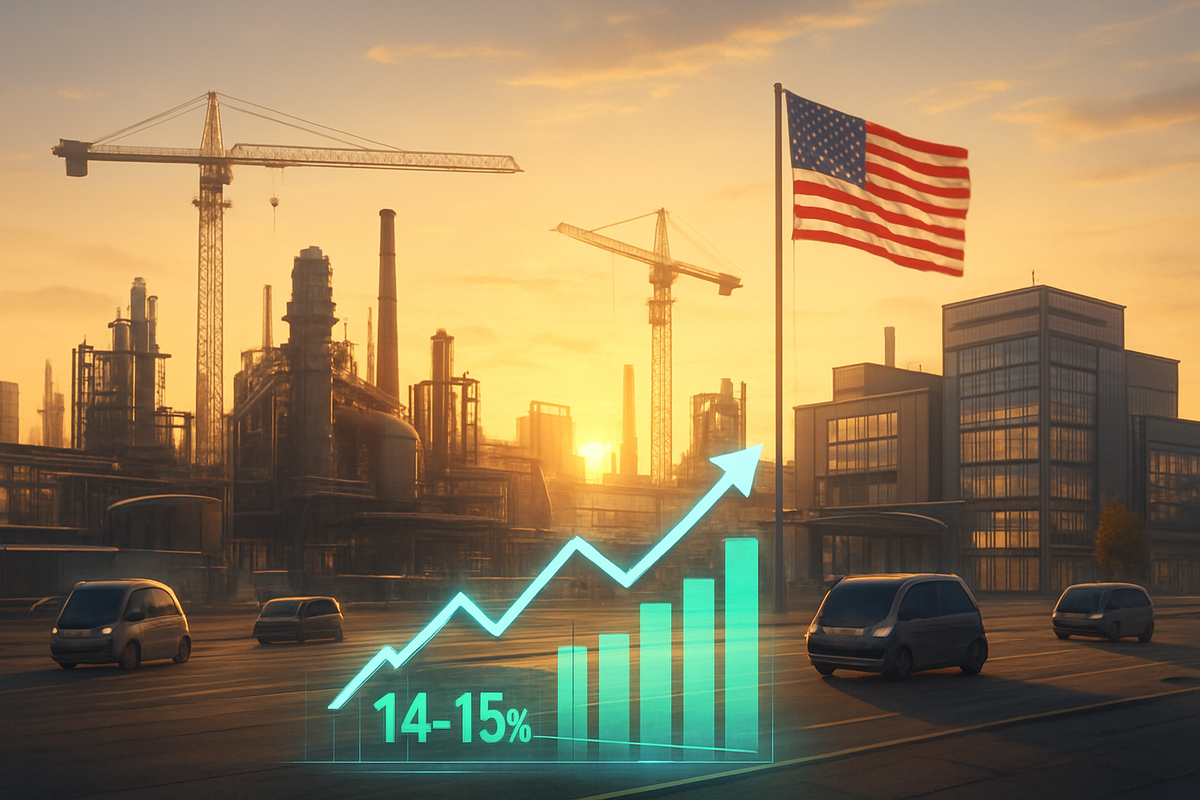
The immediate implications are stark: the S&P 500 is currently projected to see earnings growth of 14% to 15% for the 2026 fiscal year. This surge represents a broadening of the market's rally, moving beyond the technology giants that dominated the early 2020s and into the heart of the industrial and manufacturing sectors. For the first time in nearly a decade, CFOs are operating with a permanent tax code, triggering what many analysts are calling a "CapEx Supernova" as domestic investment hits record highs.
The Road to 'Economic Independence Day'
The path to this moment began in the volatile legislative sessions of early 2025. Following the 2024 election, the incoming administration prioritized a sweeping budget reconciliation package designed to codify the Tax Cuts and Jobs Act (TCJA) of 2017 before its scheduled expiration. Officially designated as Public Law 119-21, the One Big Beautiful Bill was signed on July 4, 2025, a date the White House branded "Economic Independence Day." The bill’s passage was the culmination of months of intense negotiation between domestic manufacturing lobbyists, labor advocates, and fiscal conservatives.
Key stakeholders, including the U.S. Chamber of Commerce and various industrial coalitions, pushed for the restoration of 100% bonus depreciation and immediate R&D expensing—two pillars that had been gradually phasing out or amortizing since 2022. By making these provisions permanent, the bill effectively de-risked long-term capital projects. Initial market reactions in late 2025 were characterized by a massive rotation into cyclicals, as the uncertainty that had plagued corporate boardrooms throughout 2024 evaporated.
Winners in the New Fiscal Framework
The primary beneficiaries of the OBBBA are companies heavily leveraged toward domestic production and capital-intensive infrastructure. Industrial giants like Caterpillar (NYSE: CAT) and Deere & Co (NYSE: DE) have seen their order books swell as the 100% bonus depreciation provision makes immediate equipment upgrades more attractive than ever. Similarly, the new Manufacturing Facility Deduction has provided a massive tailwind for semiconductor firms like Intel (NASDAQ: INTC), which are currently expanding their U.S. "fabs" to capture immediate tax write-offs for construction costs.
The technology sector, particularly the "Magnificent Seven," continues to thrive under the restored R&D expensing rules. Companies like Nvidia (NASDAQ: NVDA) and Microsoft (NASDAQ: MSFT) are now able to fully deduct their multi-billion dollar AI research investments in the year they occur, rather than amortizing them over five years. Furthermore, the automotive sector, including Ford (NYSE: F) and General Motors (NYSE: GM), is benefiting from the new auto loan interest deduction, which has stimulated consumer demand for U.S.-assembled vehicles despite higher interest rates. Conversely, retailers heavily reliant on low-cost Chinese imports are facing a more difficult transition, though the $141 billion in consumer tax refunds expected in the first half of 2026 are providing a temporary cushion against the "tariff medicine."
A Global Rebalancing and the Death of the 'Tax Cliff'
The wider significance of the OBBBA lies in its role as a counterweight to the administration's aggressive trade policies. While the 2025 tariffs on Chinese and non-USMCA goods initially stoked fears of stagflation, the 2026 outlook suggests these effects are "fading" as supply chains relocate and tax stimulus kicks in. This event fits into a broader industry trend of "near-shoring" and "friend-shoring," where corporate strategy is now dictated more by geopolitical resilience and tax efficiency than by pure labor-cost arbitrage.
The policy shift also represents a historical departure from the "stop-go" tax policies of the last thirty years. By removing the sunset provisions that typically dog tax legislation, the federal government has provided a level of regulatory certainty not seen since the 1980s. This has prompted a ripple effect among global competitors; nations in Europe and Asia are now reportedly considering their own corporate tax overhauls to prevent a "capital flight" toward the newly incentivized American manufacturing base.
The Horizon: Challenges and Strategic Pivots
Looking ahead, the short-term outlook remains overwhelmingly bullish, but the long-term sustainability of this stimulus is the subject of intense debate. In the coming 12 to 24 months, companies will likely continue their aggressive domestic expansion. However, the pivot to U.S.-based supply chains is not without its hurdles. A looming labor shortage in specialized manufacturing could act as a ceiling on growth, forcing companies to invest even more heavily in automation and robotics.
Investors should be prepared for potential strategic pivots as the "no tax on overtime" and "no tax on tips" provisions alter the labor market. Service-oriented companies like Darden Restaurants (NYSE: DRI) may see a more stable workforce, while manufacturing firms may use the tax-free overtime to bridge the labor gap. The primary challenge moving forward will be the federal deficit, which could eventually force a hawkish turn from the Federal Reserve if the stimulus-driven growth leads to persistent inflationary pressure.
Navigating the 2026 Bull Market
The One Big Beautiful Bill has successfully reset the corporate earnings trajectory for 2026. By replacing the looming threat of a "tax cliff" with permanent incentives for domestic investment, the act has paved the way for a 14-15% earnings growth rate that few thought possible a year ago. The market has moved past the "tariff shock" of 2025, focusing instead on the net benefits of a pro-growth fiscal framework and the massive influx of consumer refunds.
As the year progresses, investors should keep a close eye on the "CapEx Supernova"—specifically the quarterly reports of heavy machinery and technology firms—to ensure that tax-incentivized spending is translating into real-world productivity gains. While the OBBBA has provided the "carrot" to the "stick" of trade protectionism, the ultimate success of this era will depend on whether the U.S. industrial base can scale fast enough to meet the demand created by this historic stimulus.
This content is intended for informational purposes only and is not financial advice