On January 21, 2026, the European Union officially shuttered the final major gateway for Russian energy revenues, implementing a sweeping ban on refined petroleum products produced in third countries using Russian-origin crude oil. This decisive move, a cornerstone of the EU’s 18th sanctions package, aims to end the "laundering" process where Russian oil was refined in nations like India and Turkey before being sold to European consumers as "clean" fuel. The immediate result has been a seismic shift in global trade routes, characterized by a frantic scramble for compliant supplies and a significant spike in middle distillate prices across the continent.
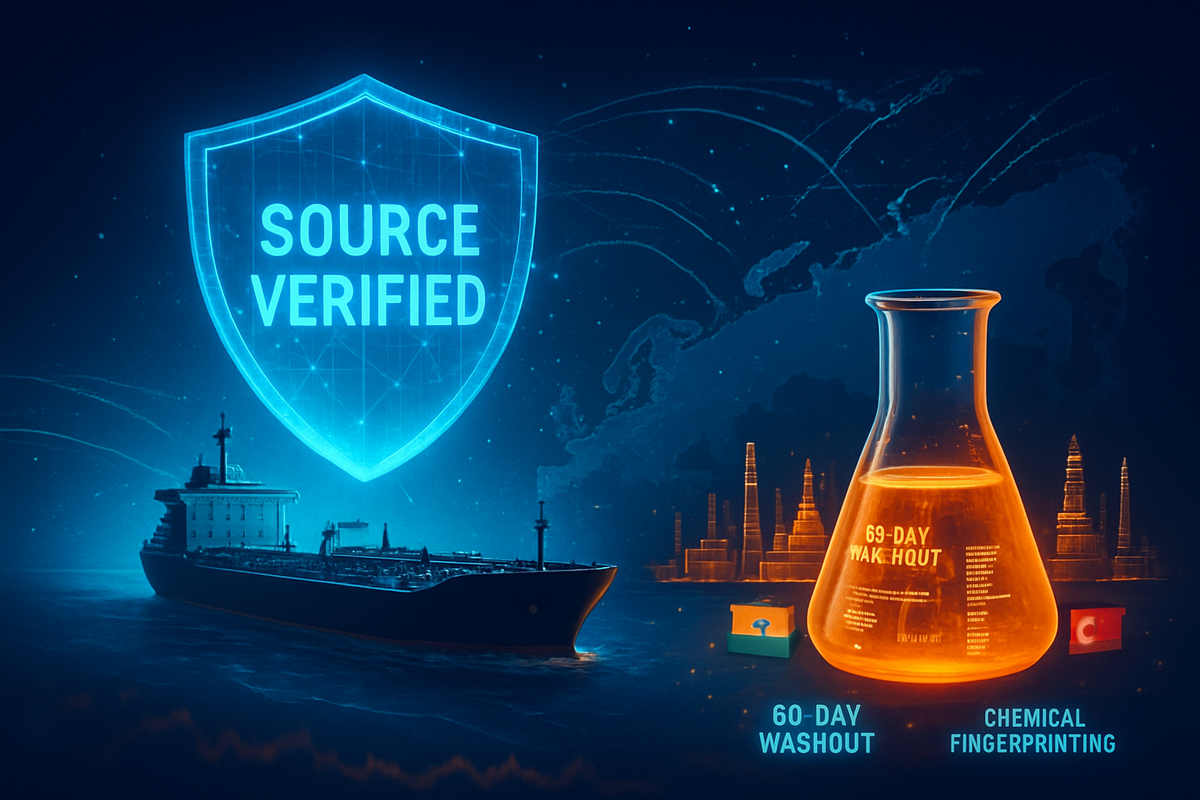
The new regulations, governed by Article 3ma of Council Regulation (EU) No. 833/2014, have introduced a rigorous "guilty until proven innocent" framework for energy imports. Importers must now provide exhaustive documentation, including refinery attestation letters and proof of a 60-day "washout" period, to ensure no Russian molecules have tainted the supply chain. As the deadline passed, the physical market tightened significantly, with diesel cracks reaching levels not seen since the initial energy crisis of 2022, signaling a difficult transition period for European industrial and transport sectors.
The 18th Package: From Loophole to Fortress
The journey to this moment began on July 18, 2025, when the EU Council adopted the 18th sanctions package. While previous measures had targeted direct imports of Russian crude and refined products, the "refining loophole" remained a glaring weakness. Throughout 2024 and 2025, refineries in Asia and the Middle East became massive hubs for Russian crude, exporting the finished products—primarily diesel and jet fuel—to Europe at a premium. The 18th package was specifically engineered to dismantle this arbitrage, requiring that any refined product entering the EU (under CN code 2710) be derived from non-Russian crude (CN code 2709).
The implementation phase leading up to January 21 was marked by unprecedented logistical hurdles. Importers from "high-risk" transit points are now subjected to Enhanced Due Diligence (EDD), which mandates the verification of ship-to-ship (STS) transfers and the use of satellite tracking to ensure cargo was not tampered with or mislabeled during transit. To comply, many refineries were forced to adopt a "physical segregation" model, where specific production lines were dedicated solely to non-Russian feedstocks. For those unable to segregate, a 60-day "washout" rule was applied, requiring a complete halt of Russian crude processing for two months prior to any export to the EU.
Market participants reacted to the impending deadline with a massive wave of stockpiling throughout the fourth quarter of 2025. European traders, fearing a supply vacuum, increased diesel imports from India to over 260,000 barrels per day (bpd) by late autumn, while flows from the United States reached record highs. This surge in demand, combined with Ukrainian drone strikes on Russian refinery infrastructure in late 2025, created a "perfect storm" of low inventories and high prices just as the ban took full effect.
Winners and Losers in the Refining Landscape
The impact of the ban has created a stark divide among global refiners, with Reliance Industries Limited (NSE: RELIANCE) emerging as a primary strategic "winner." Leveraging its massive Jamnagar complex, the world’s largest single-site refinery, Reliance successfully bifurcated its operations. By December 2025, the company had transitioned its export-oriented Special Economic Zone (SEZ) refinery to process 100% non-Russian crude, while continuing to utilize Russian barrels for its Domestic Tariff Area (DTA) refinery to satisfy the Indian market. This "dual-track" strategy has allowed Reliance to maintain its lucrative European export market while still benefiting from discounted Russian feedstocks for domestic sales.
In contrast, Turkish refiner Tupras (IST: TUPRS) faces a more complex challenge. While the company has invested over $70 million in modernizing its Izmir refinery to increase high-value output, the logistical integration of its sites makes total segregation difficult. While Tupras reportedly halted Russian imports at its Izmir facility in early January to meet the "washout" criteria, its other sites remain heavily reliant on Russian supply for domestic consumption. This has effectively split the company’s output into "EU-eligible" and "restricted" streams, complicating its export logistics and increasing operational costs.
The clearest "losers" in this new regime are the single-unit refineries that lack the scale to segregate production. The STAR refinery in Turkey, operated by SOCAR, found itself in a precarious position due to its single distillation unit. Without the ability to run separate streams, the refinery faced a binary choice: continue processing Russian crude for the domestic market or pivot entirely to more expensive global benchmarks to retain its 73% share of the EU export market. Meanwhile, Russian majors like Rosneft Oil Company (MCX: ROSN) and Lukoil (MCX: LKOH) are seeing their indirect access to the European market evaporate, forcing them to offer even steeper discounts to Chinese and African buyers to maintain export volumes.
A New Era of Energy Decoupling
The Jan 21 ban represents more than just a regulatory shift; it is the final act in the West’s multi-year effort to decouple its energy infrastructure from Russian influence. This event fits into a broader industry trend of "friend-shoring" and the prioritization of supply chain transparency over raw cost efficiency. Historically, the global oil market was a fungible commodity pool where the origin of a molecule was secondary to its chemical specification. The 18th package has effectively "fingerprinted" the market, creating a two-tier pricing system for "clean" and "tainted" refined products.
This shift mirrors the historical precedents set during the 1970s oil shocks, where geopolitical alignment reshaped trade flows for decades. However, the modern version is far more data-intensive. The requirement for refinery attestation and molecular tracing is driving a boom in "reg-tech" for the energy sector. We are seeing the emergence of blockchain-based tracking systems and chemical markers that allow regulators to verify the origin of fuel at the pump. This regulatory evolution will likely serve as a blueprint for future sanctions against other states, setting a new global standard for energy accountability.
The ripple effects are also being felt by partners and competitors alike. Middle Eastern refiners in Saudi Arabia and Kuwait, who are exempt from the same "laundering" scrutiny due to their status as net crude exporters, are aggressively moving to capture the market share vacated by Indian and Turkish barrels. This has strengthened the geopolitical leverage of the Gulf states within the EU, potentially complicating Europe’s long-term goal of transitioning away from all fossil fuels as it becomes more dependent on a narrower set of "friendly" suppliers.
Navigating the Post-Ban Reality
In the short term, the market is bracing for a period of "structural volatility." While the stockpiling of late 2025 provided a temporary cushion, the true test will come in the spring of 2026 as those inventories are depleted and the new, more expensive supply chains must bear the full load of European demand. Strategic pivots are already underway; we expect to see an increase in "swap agreements" where refiners trade compliant barrels for non-compliant ones to optimize logistics, though such moves will be under intense scrutiny from EU customs authorities.
Longer-term, the EU’s move is expected to accelerate the electrification of the European transport sector. As the cost of diesel and heating oil remains elevated due to the "sanctions premium," the economic case for electric vehicles and heat pumps becomes even more compelling. For refiners, the adaptation will require massive capital expenditure in "clean" refining technology and the expansion of storage infrastructure to manage segregated streams. This "segregation-as-a-service" could become a new business model for midstream companies operating in transit hubs like Singapore and the UAE.
Market opportunities are also emerging for US-based refiners like Valero Energy Corporation (NYSE: VLO) and Marathon Petroleum Corporation (NYSE: MPC). With European refining capacity constrained and the Russian "backdoor" closed, US distillates are poised to become the swing supply for the Atlantic Basin. However, this opportunity comes with the risk of domestic price inflation in the US, which could lead to political pressure to restrict exports—a scenario that would leave Europe in an even more precarious energy position.
Summary and Investor Outlook
The activation of the EU’s 18th sanctions package on January 21, 2026, marks the end of the "refining loophole" and a major escalation in the economic isolation of Russia. By requiring rigorous proof of origin and 60-day washout periods, the EU has successfully erected a barrier that prevents Russian crude from reaching its shores in refined form. While this move enhances European energy security and restricts the Kremlin's revenue, it does so at the cost of higher prices and increased supply chain complexity.
Moving forward, investors should watch for the sustainability of the "dual-refinery" model adopted by large-scale players like Reliance Industries Limited (NSE: RELIANCE). If the EU tightens definitions further to include "corporate-level" bans rather than "facility-level" bans, even these giants could face headwinds. Additionally, the performance of Turkish refiners like Tupras (IST: TUPRS) will be a bellwether for how medium-sized players navigate the high costs of compliance.
The lasting impact of this event is the permanent fragmentation of the global oil market. The era of cheap, anonymous Russian energy is over for the West, replaced by a transparent, high-cost, and geopolitically aligned energy ecosystem. For the coming months, the focus for market watchers will be on the "diesel spread"—the price difference between European and Asian fuel—which will serve as the primary indicator of how effectively the world is adapting to this new, bifurcated reality.
This content is intended for informational purposes only and is not financial advice.