As of December 19, 2025, ON Semiconductor (NASDAQ: ON), commonly known as onsemi, finds itself at a critical juncture in the global semiconductor market. After navigating a challenging 2024 and a transitional 2025, the company is emerging as a stabilizing leader in the power semiconductor space. While the broader automotive and industrial sectors have faced a prolonged "inventory digestion" phase, onsemi's strategic pivot toward high-growth AI data center power solutions and its aggressive vertical integration in Silicon Carbide (SiC) have caught the attention of Wall Street analysts.
The immediate significance of onsemi’s current position lies in its resilience. Despite a cyclical downturn that saw revenue contract year-over-year, the company has maintained steady gross margins in the high 30% range and recently authorized a massive $6 billion share repurchase program. This move, combined with a flurry of analyst price target adjustments, signals a growing confidence that the company has reached its "trough" and is poised for a significant recovery as it scales its next-generation 200mm SiC manufacturing capabilities.
Technical Milestones and the 200mm SiC Transition
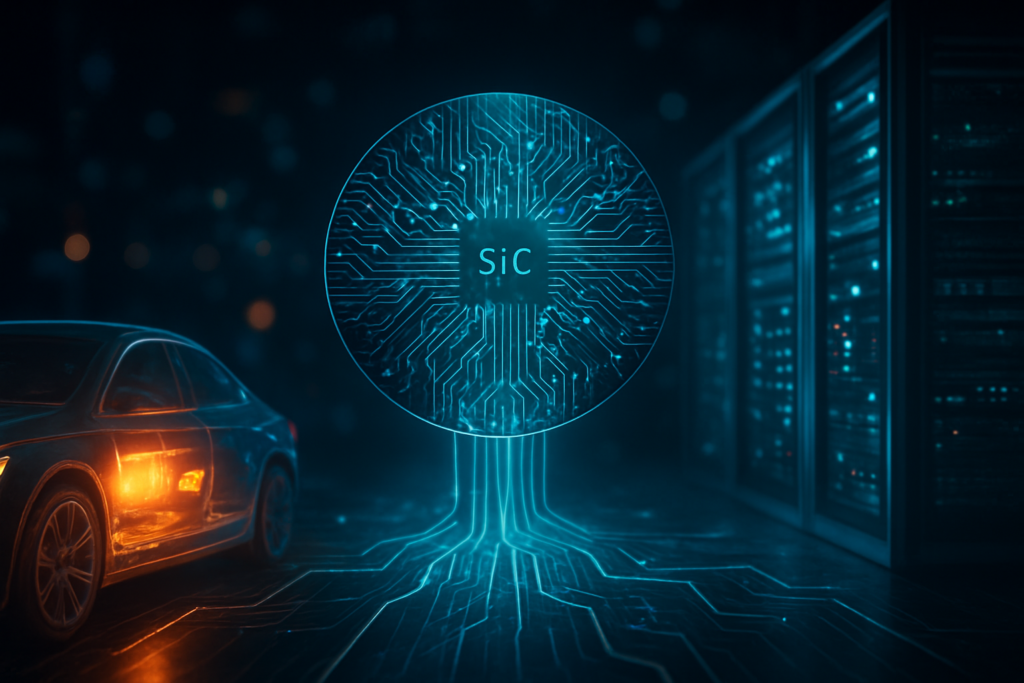
The technical narrative for onsemi in late 2025 is dominated by the transition from 150mm to 200mm (8-inch) Silicon Carbide wafers. This shift is not merely a change in size but a fundamental leap in manufacturing efficiency and cost-competitiveness. By moving to larger wafers, onsemi expects to significantly increase the number of chips per wafer, effectively lowering the cost of high-voltage power semiconductors essential for 800V electric vehicle (EV) architectures. The company has confirmed it is on track to begin generating meaningful revenue from 200mm production in early 2026, a milestone that industry experts view as a prerequisite for maintaining its roughly 24% share of the global SiC market.
In addition to SiC, onsemi has made significant strides in its Field Stop 7 (FS7) IGBT technology. These devices are designed for high-power industrial applications, including solar inverters and energy storage systems. The FS7 platform offers lower switching losses and higher power density compared to previous generations, allowing for more compact and efficient energy infrastructure. Initial reactions from the industrial research community have been positive, noting that these advancements are crucial for the global transition toward renewable energy grids that require robust, high-efficiency power management.
Furthermore, onsemi’s "Fab Right" strategy—a multi-year effort to consolidate manufacturing into fewer, more efficient, vertically integrated sites—is beginning to pay technical dividends. By controlling the entire supply chain from substrate growth to final module assembly, the company has achieved a level of quality control and supply assurance that few competitors can match. This vertical integration is particularly critical in the SiC market, where material scarcity and processing complexity have historically been major bottlenecks.
Competitive Dynamics and the AI Data Center Pivot
While the EV market has seen a slower-than-expected recovery in North America and Europe throughout 2025, onsemi has successfully offset this weakness by aggressively entering the AI data center market. In a landmark collaboration announced earlier this year with NVIDIA (NASDAQ: NVDA), onsemi is now supporting 800VDC power architectures for next-generation AI server racks. These high-voltage systems are designed to minimize energy loss as power moves from the grid to the GPU, a critical factor for data centers that are increasingly constrained by power availability and cooling costs.
This pivot has placed onsemi in direct competition with other power giants like STMicroelectronics (NYSE: STM) and Infineon Technologies (OTCMKTS: IFNNY). While STMicroelectronics currently leads the SiC market by a small margin, onsemi’s recent deal with GlobalFoundries (NASDAQ: GFS) to develop 650V Gallium Nitride (GaN) power devices suggests a broadening of its portfolio. GaN technology is particularly suited for the ultra-compact power supply units (PSUs) used in AI servers, providing a complementary offering to its high-voltage SiC products.
The competitive landscape is also being reshaped by onsemi’s focus on the Chinese EV market. Despite geopolitical tensions, onsemi has secured several major design wins with leading Chinese OEMs who are leading the charge in 800V vehicle adoption. By positioning itself as a key supplier for the most technologically advanced vehicles, onsemi is creating a strategic moat that protects its market share against lower-cost competitors who lack the high-voltage expertise and integrated supply chain of the Arizona-based firm.
Wider Significance for the AI and Energy Landscape
The evolution of onsemi reflects a broader trend in the technology sector: the convergence of AI and energy efficiency. As AI models become more computationally intensive, the demand for sophisticated power management has shifted from a niche industrial concern to a primary driver of the semiconductor industry. onsemi’s ability to double its AI-related revenue year-over-year in 2025 highlights how critical power semiconductors have become to the "AI Gold Rush." Without the efficiency gains provided by SiC and GaN, the energy requirements of modern data centers would be unsustainable.
This development also underscores the changing nature of the EV market. The "hype phase" of 2021-2023 has given way to a more mature, performance-oriented market where efficiency is the primary differentiator. onsemi’s focus on 800V systems aligns with the industry’s shift toward faster charging and longer range, proving that the underlying technology is still advancing even if consumer adoption rates have hit a temporary plateau.
However, the path forward is not without concerns. Analysts have pointed to the risks of overcapacity as onsemi, Wolfspeed (NYSE: WOLF), and others all race to bring massive SiC manufacturing hubs online. The Czech Republic hub and the expansion in Korea represent multi-billion-dollar bets that demand will eventually catch up with supply. If the EV recovery stalls further or if AI power needs are met by alternative technologies, these capital-intensive investments could pressure the company’s balance sheet in the late 2020s.
Future Developments and Market Outlook
Looking ahead to 2026 and beyond, the primary catalyst for onsemi will be the full-scale ramp of its 200mm SiC production. This transition is expected to unlock a new level of profitability, allowing the company to compete more aggressively on price while maintaining its premium margins. Experts predict that as the cost of SiC modules drops, we will see a "trickle-down" effect where high-efficiency power electronics move from luxury EVs and high-end AI servers into mid-range consumer vehicles and broader industrial automation.
Another area to watch is the expansion of the onsemi-GlobalFoundries partnership. The integration of GaN technology into onsemi’s "EliteSiC" ecosystem could create a "one-stop shop" for power management, covering everything from low-power consumer electronics to megawatt-scale industrial grids. Challenges remain, particularly in the yield rates of 200mm SiC and the continued geopolitical complexities of the semiconductor supply chain, but onsemi’s diversified approach across AI, automotive, and industrial sectors provides a robust buffer.
In the near term, the market will be closely watching onsemi’s Q4 2025 earnings report and its initial guidance for 2026. If the company can demonstrate that its AI revenue continues to scale while its automotive business stabilizes, the consensus price target of $59.00 may prove to be conservative. Many analysts believe that as the "inventory digestion" cycle ends, onsemi could see a rapid re-rating of its stock price, potentially reaching the $80-$85 range as investors price in the 2026 recovery.
Summary of the Power Semiconductor Landscape
In conclusion, ON Semiconductor has successfully navigated one of the most volatile periods in recent semiconductor history. By maintaining financial discipline through its $6 billion buyback program and "Fab Right" strategy, the company has prepared itself for the next leg of growth. The shift from a purely automotive-focused story to a diversified power leader serving the AI data center market is a significant milestone that redefines onsemi’s role in the tech ecosystem.
As we move into 2026, the key takeaways for investors and industry observers are the company’s technical leadership in the 200mm SiC transition and its critical role in enabling the energy-efficient AI infrastructure of the future. While risks regarding global demand and manufacturing yields persist, onsemi’s strategic positioning makes it a bellwether for the broader health of the power semiconductor market. In the coming weeks, all eyes will be on the company’s execution of its manufacturing roadmap, which will ultimately determine its ability to lead the next generation of energy-efficient technology.
This content is intended for informational purposes only and represents analysis of current AI and semiconductor developments.
TokenRing AI delivers enterprise-grade solutions for multi-agent AI workflow orchestration, AI-powered development tools, and seamless remote collaboration platforms.
For more information, visit https://www.tokenring.ai/.