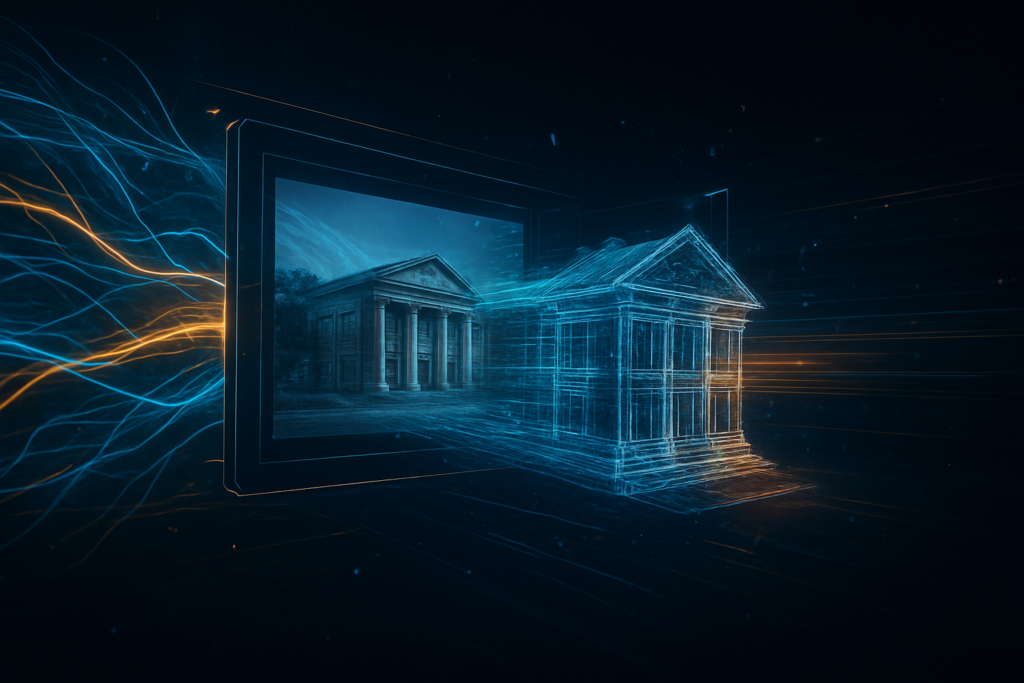
In a move that has sent shockwaves through the creative and tech industries, OpenAI has officially unveiled GPT Image 1.5, a transformative update to its visual generation ecosystem. Announced during the company’s "12 Days of Shipmas" event in December 2025, the new model marks a departure from traditional diffusion-based systems in favor of a native multimodal architecture. The results are nothing short of a paradigm shift: image generation speeds have been slashed by 400%, reducing wait times to a mere three to five seconds, effectively enabling near-real-time creative iteration for the first time.
Beyond raw speed, the most profound breakthrough comes in the form of integrated video-to-3D capabilities. Leveraging the advanced spatial reasoning of the newly released GPT-5.2 and Sora 2, OpenAI now allows creators to transform short video clips into functional, high-fidelity 3D models. This development bridges the gap between 2D content and 3D environments, allowing users to export assets in standard formats like .obj and .glb. By turning passive video data into interactive geometric meshes, OpenAI is positioning itself not just as a content generator, but as the foundational engine for the next generation of spatial computing and digital manufacturing.
Native Multimodality and the End of the "Diffusion Wait"
The technical backbone of GPT Image 1.5 represents a significant evolution in how AI processes visual data. Unlike its predecessors, which often relied on separate text-encoders and diffusion modules, GPT Image 1.5 is built on a native multimodal architecture. This allows the model to "think" in pixels and text simultaneously, leading to unprecedented instruction-following accuracy. The headline feature—a 4x increase in generation speed—is achieved through a technique known as "consistency distillation," which optimizes the neural network's ability to reach a final image in fewer steps without sacrificing detail or resolution.
This architectural shift also introduces "Identity Lock," a feature that addresses one of the most persistent complaints in AI art: inconsistency. In GPT Image 1.5, users can perform localized, multi-step edits—such as changing a character's clothing or swapping a background object—while maintaining pixel-perfect consistency in lighting, facial features, and perspective. Initial reactions from the AI research community have been overwhelmingly positive, with many experts noting that the model has finally solved the "garbled text" problem, rendering complex typography on product packaging and UI mockups with flawless precision.
A Competitive Seismic Shift for Industry Titans
The arrival of GPT Image 1.5 and its 3D capabilities has immediate implications for the titans of the software world. Adobe (NASDAQ: ADBE) has responded with a "choice-based" strategy, integrating OpenAI’s latest models directly into its Creative Cloud suite alongside its own Firefly models. While Adobe remains the "safe haven" for commercially cleared content, OpenAI’s aggressive 20% price cut for API access has made GPT Image 1.5 a formidable competitor for high-volume enterprise workflows. Meanwhile, NVIDIA (NASDAQ: NVDA) stands as a primary beneficiary of this rollout; as the demand for real-time inference and 3D rendering explodes, the reliance on NVIDIA’s H200 and Blackwell architectures has reached record highs.
In the specialized field of engineering, Autodesk (NASDAQ: ADSK) is facing a new kind of pressure. While OpenAI’s video-to-3D tools currently focus on visual meshes for gaming and social media, the underlying spatial reasoning suggests a future where AI could generate functionally plausible CAD geometry. Not to be outdone, Alphabet Inc. (NASDAQ: GOOGL) has accelerated the rollout of Gemini 3 and "Nano Banana Pro," which some benchmarks suggest still hold a slight edge in hyper-realistic photorealism. However, OpenAI’s "Reasoning Moat"—the ability of its models to understand complex, multi-step physics and depth—gives it a strategic advantage in creating "World Models" that competitors are still struggling to replicate.
From Generating Pixels to Simulating Worlds
The wider significance of GPT Image 1.5 lies in its contribution to the "World Model" theory of AI development. By moving from 2D image generation to 3D spatial reconstruction, OpenAI is moving closer to an AI that understands the physical laws of our reality. This has sparked a mix of excitement and concern across the industry. On one hand, the democratization of 3D content means a solo creator can now produce cinematic-quality assets that previously required a six-figure studio budget. On the other hand, the ease of creating dimensionally accurate 3D models from video has raised fresh alarms regarding deepfakes and the potential for "spatial misinformation" in virtual reality environments.
Furthermore, the impact on the labor market is becoming increasingly tangible. Entry-level roles in 3D prop modeling and background asset creation are being rapidly automated, shifting the professional landscape toward "AI Curation." Industry analysts compare this milestone to the transition from hand-drawn animation to CGI; while it displaces certain manual tasks, it opens a vast new frontier for interactive storytelling. The ethical debate has also shifted toward "Data Sovereignty," as artists and 3D designers demand more transparent attribution for the spatial data used to train these increasingly capable world-simulators.
The Horizon of Agentic 3D Creation
Looking ahead, the integration of OpenAI’s "o-series" reasoning models with GPT Image 1.5 suggests a future of "Agentic 3D Creation." Experts predict that within the next 12 to 18 months, users will not just prompt for an object, but for an entire interactive environment. We are approaching a point where a user could say, "Build a 3D simulation of a rainy city street with working traffic lights," and the AI will generate the geometry, the physics engine, and the lighting code in a single stream.
The primary challenge remaining is the "hallucination of physics"—ensuring that 3D models generated from video are not just visually correct, but structurally sound for applications like 3D printing or architectural prototyping. As OpenAI continues to refine its "Shipmas" releases, the focus is expected to shift toward real-time VR integration, where the AI can generate and modify 3D worlds on the fly as a user moves through them. The technical hurdles are significant, but the trajectory established by GPT Image 1.5 suggests these milestones are closer than many anticipated.
A Landmark Moment in the AI Era
The release of GPT Image 1.5 and the accompanying video-to-3D tools mark a definitive end to the era of "static" generative AI. By combining 4x faster generation speeds with the ability to bridge the gap between 2D and 3D, OpenAI has solidified its position at the forefront of the spatial computing revolution. This development is not merely an incremental update; it is a foundational shift that redefines the boundaries between digital creation and physical reality.
As we move into 2026, the tech industry will be watching closely to see how these tools are integrated into consumer hardware and professional pipelines. The key takeaways are clear: speed is no longer a bottleneck, and the third dimension is the new playground for artificial intelligence. Whether through the lens of a VR headset or the interface of a professional design suite, the way we build and interact with the digital world has been permanently altered.
This content is intended for informational purposes only and represents analysis of current AI developments.
TokenRing AI delivers enterprise-grade solutions for multi-agent AI workflow orchestration, AI-powered development tools, and seamless remote collaboration platforms.
For more information, visit https://www.tokenring.ai/.